Incidental innovation: Sentry Road advances tanker industry training
Key Highlights
- Sentry Road’s platform offers interactive, multi-lingual courses accessible on desktop and mobile, leading to better knowledge retention and safer operations.
- New leadership is aiming to scale the business, incorporate AI and API integrations, and expand services into adjacent industries.
- The training software provider’s clients, including Dana and Express Container, report significant safety improvements and streamlined compliance management thanks to customized training modules.
- Future developments include new invoicing software, enhanced safety features, and industry collaborations to lower insurance premiums and improve confined-space rescue protocols.
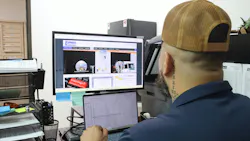
Sentry Road founder Kyle Scallan didn’t set out to develop the industry’s most dynamic tank truck-specific training software. He’ll be the first to tell you it happened “by accident.” But the truth is he identified two needs, then filled them. He needed work after leaving Quality Carriers in 2010, and Express Container needed a purpose-built solution for tank cleaning operations.
“Our previous system didn’t pertain to what we do,” said Shane Soldinger, Express Container regional manager, who worked with Scallan at Quality Carriers before joining Express Container. “Their confined-space entry program was for sewer manholes, and fall-protection training involved roofers. So, Kyle went out to our locations, reviewed our processes and safety procedures, took pictures and videos, and created a tank cleaning-specific module.
“It was a gamechanger for us.”
Technology-enabled expansion
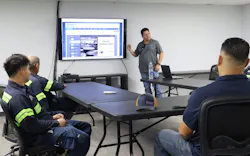
Scallan, who has 27 years of tank truck experience, developed Sentry Road’s “baseline” courses in partnership with Cheryl Austin, who helped him start the company, and Express Container, his first customer. He also leaned on the many relationships forged while serving a tight-knit trucking segment, his wife’s insights as a veteran teacher—like combining visual, auditory, and kinesthetic elements to ensure adult learning is effective for everyone—and his own initiative, eventually teaching himself how to create LMS software.
“You have to get creative, because let’s face it, hazard communication is not something that’s real exciting,” Scallan said. “So, you have to make it look good, and it must be interactive.”
Tormey, whose background is in private equity and financial services, was looking for a company to take over after founding Tormey Capital Partners in 2023 and found the perfect partner in Sentry Road. Tormey spent two years with education technology firm FEV Tutor, giving him LMS experience, and Scallan had already created a trusted brand he could help expand. Their goal is to utilize new tools, such as agentic AI and API connections, and subject-matter experts, including teachers, to pair “technology-enabled” services with “best-in-class” software.
“Jim’s taking this company to a whole new level,” Scallan enthused.
Still headquartered in Tampa, Florida, Sentry Road now has a growing team of full-time employees and contractors, and an expanding customer base. The partner-oriented outfit specializes in creating custom content with company personnel, equipment, and logos; dedicated websites for larger operations; and regularly updating a diverse range of “foundational” courses based on evolving DOT, FMCSA, EPA, and OSHA regulations and best practices. Sentry Road also automates mundane tasks, like storing and sorting certificates, and serves as a repository for critical data, such as employee handbooks and SOPs.
“Our focus has been—and will continue to be—on the tank truck space, which is fairly unique among learning management software providers, who typically serve the broader market,” Tormey emphasized.
“But we also want to keep growing, and serve more people across the industry.”
Partner-driven success
Express Container was a willing partner from the beginning.
“Sentry Road’s training is way better than what we had when we started working with them,” said Matt Moser, Express Container general manager. “So, I have nothing but good things to say about it.”
Soldinger sites Sentry Road’s convenience (training is available on desktop and mobile), multi-lingual availability, and interactivity as key features. Enhanced engagement leads to better knowledge retention and, in turn, better safety outcomes and lower employee turnover, he added. That’s why he’s happy to spread the word about Sentry Road’s service. “We don’t want to see anybody get injured or killed,” Soldinger said. “So, the easier we make the training, and the more consistent it is, the safer everyone will be across the tank truck industry.”
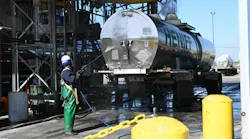
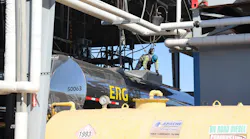
Express Container now rotates 18 custom training modules on an 11-month basis across its 19 locations, ensuring all 300 employees stay safe and compliant. The company’s safety record has “improved tremendously” since adopting Sentry Road’s platform, Soldinger attested, mitigating incidents at even its busiest locations, including the 14-acre, six-bay Industrial Drive site in Houston, where Express Container cleans up to 120 tankers, containers, and pumps daily.
“We haven’t had any incidents since I’ve been here,” said Michael Calderon, facility manager since 2019.
“Sentry Road training is great. We love it.”
Dana Transport, an independently operated sister to Express Container, noticed the system’s efficacy, sparking adoption across its entire operation, which includes 1,300 trucks, 1,500 drivers, 10,000 company-owned trailers, and 22 tank cleaning facilities. Drivers now have personalized training videos available on demand, making them convenient “refreshers” for in-field tasks; and Dana has easy access to verified credentials for on-site reviews.
“They handle all our reporting, which offers tremendous value for us,” said Thomas Decinque, Dana safety director.
Added Tormey: “We provide reminders and weekly updates, so users can see who’s completed the training, who’s falling behind, and who has training coming up. They can go into our database and pull every assessment a person has completed to demonstrate knowledge retention. And when a safety leader can show that to an inspector or auditor within the first 10-20 minutes of a conversation, the temperature goes down.”
No shortcuts in safety
Sentry Road’s cache with cleaners and carriers is climbing—and Tormey isn’t done innovating. He’s currently studying how to help customers lower insurance premiums through improved safety outcomes, and leading a confined-space entry subcommittee for National Tank Truck Carriers’ Tank Cleaning and Maintenance Council. And the Sentry Road team is focused on producing more short-form training content and fine-tuning the Cleaning Rack invoicing system.
“Continuous improvement is a core value,” Tormey said. “We want to keep getting better in everything we do.”
Tormey, who’s helping develop NTTC’s best-practices playbook for confined-space incidents, says regular rescue drills that cover different scenarios are essential. Partnering with first responders when possible, and combining effective software with “sobering” content and hands-on training are equally important, Soldinger insisted. “If confined-space entries aren’t done correctly, they can be deadly,” he said. “They’re probably the most consequential thing we do every day, and it can be the safest thing in the world if you follow the protocols.
“But if you take a shortcut, it could mean your life.”
Errors on wash tickets and invoices cost cleaners time and money. That’s why Soldinger long sought a digital system that accelerates the process, and Scallan finally agreed to help him—now that he has Tormey’s support. Cleaning Rack software makes ticket creation faster, automatically reconciles billing rates with material costs, ensures recurring charges aren’t overlooked, and securely enhances visibility.
“It’s a significant innovation to a process that’s been around for decade,” Tormey said.
As with Sentry’s Road’s earliest endeavors, Express Container is the “guinea pig” for Cleaning Rack’s dynamic-dashboard technology. Moser says they’re “working out the kinks” in a pilot program, particularly when it comes to communications between systems, but Tormey believes they’re close, and he plans to roll the software out to the market as soon as it’s ready.
“It’s going to be great,” Calderon predicted.