Tank cleaning safety is serious business
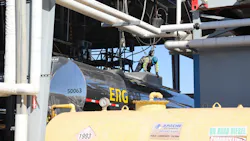
Typically, I don’t take anything too seriously, including myself. And an easy-going, unbothered attitude is a solid survival strategy on many walks through life, including business-to-business journalism. But flippancy doesn’t fly in the tank cleaning industry, where unserious actions can be fatal. If you don’t believe me, spend a day reviewing accident reports from the Occupational Safety and Health Administration for a sobering dose of reality.
Two such reports detail deadly incidents that occurred in January 2025. One involved a worker at a truck wash who suffered a fatal head injury after falling into a tank trailer while trying to clean it. The other resulted in a worker who entered a 23,000-gallon tank car to take samples dying of asphyxiation. Dig deeper, and you’ll discover two 2024 reports that document how one employee cleaning the inside of a tank trailer was found unresponsive and later pronounced dead; and another was engulfed in flames while working under an LPG tanker at a cleaning facility. He didn’t survive that nightmare. And in 2023, a technician at a major Houston-area facility died from exposure to toxic vapors in a tank two days before Christmas.
OSHA determined the employer in that incident failed to verify "acceptable entry conditions" and initially recommended a fine of over $800,000. The incident also was the primary driver for a Regional Emphasis Program for Transportation Tank Cleaning that mandates proactive, unannounced inspections across the Gulf Coast region, which includes Texas, Louisiana, Arkansas, Oklahoma, through 2028. OSHA inspectors who visit as part of the REP scrutinize confined-space entry procedures, atmospheric testing, self-rescue and retrieval policies, and chemical hazards. OSHA also conducted “heat inquiries” in Region 4 cleaning facilities from January 2025 to April 2026 as part of a National Emphasis Program.
OSHA and Bureau of Safety and Environmental Enforcement regulators identified four recurring failures in a December 2023 safety alert: neglect of atmospheric testing, workers falling into the “rescuer” trap, inadequate physical barriers, and permit deficiencies. The Bureau of Labor Statistics’ most recent National Census of Fatal Occupational Injuries, released in February for the 2024 calendar year, showed an encouraging decline in “exposure to harmful substances,” but the decrease was largely attributed to a reduction in drug overdoses at work; and data indicate physical asphyxiation and toxic chemical inhalation in confined spaces remain “stubborn” causes of death in industrial cleaning activities.
So, it’s encouraging to know that people far more serious than me are endeavoring to address ongoing safety issues with new technology, enhanced training, and no-nonsense processes.
ADM Trucking, which recently claimed an Honor award in National Tank Truck Carriers 2025 North American Safety Contest, last year deployed a camera system for internal tank inspections that allows workers to verify cleanliness without entering. “Our goal is to eliminate confined space entries wherever possible,” said Steven Finn, ADM VP of North American truck transportation and logistics. “It’s all about safety—and keeping people outside confined spaces.”
Sentry Road is advancing confined-space entry training with assistance from Express Container, while Sentry Road CEO Jim Tormey leads an NTTC Tank Cleaning and Maintenance Council subcommittee focused on developing a “best-practices playbook” for cleaning facilities. And Chuck Hargraves, cotac’s long-time wash department manager in Houston, takes an old-school approach, with strict, one-strike rules governing what the facility will and won’t clean, the cleaning products they utilize, and how entries are conducted.
But Usher Transport, this issue’s cover-story fleet—and a newly crowned champion in NTTC’s 2025 safety contest—maintains perhaps the simplest policy—put people first, and safety is always top of mind.
And, as a bonus, people who feel cared for tend to stick around.
They also survive—and live to thrive another day.
Editor’s note: Check back soon for deep dives into ADM Trucking’s new cleaning facility, Sentry Road’s partnership with Express Container, Hoyer’s upgraded Houston depot, and Usher Transport’s 80th anniversary from the April/May edition of Bulk Transporter magazine.
About the Author
 Jason McDaniel
Jason McDaniel
Jason McDaniel, based in the Houston TX area, has more than 20 years of experience as an award-winning journalist. He spent 15 writing and editing for daily newspapers, including the Houston Chronicle, and began covering the commercial vehicle industry in 2018. He was named editor of Bulk Transporter and Refrigerated Transporter magazines in July 2020.