Welding the future: LBS expands essential tank services
Key Highlights
- Greg Ballard started his career in welding at age 16 and has over 46 years of experience in the tank trailer industry, passing his knowledge to his daughter Ashton Ballard.
- Liquid Bulk Services has grown from a small shop to an essential regional provider, specializing in cargo tank repairs, maintenance, and regulatory compliance.
- Ashton, a DOT-certified inspector, combines industry knowledge with a family-oriented approach, ensuring high standards and fostering community relationships.
- The company emphasizes quick turnaround, quality repairs, and safety, serving major carriers like Sprint Transport and others in Louisiana and beyond.
- Future plans include expanding into LP tank services and securing additional certifications to meet regional industry demands.
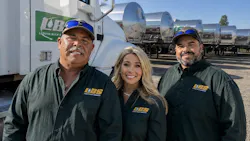
Greg Ballard always wanted to wield a welding torch. So his first job was with Slade’s Industrial Services in 1980, when he was still a sophomore in high school in Baton Rouge, Louisiana. But his parents, who dreamed of seeing their son attend medical school, weren’t thrilled with his selection. “My dad and the guy who hired me were buddies, so they tried to work me to the point where I would hate manual labor, and I’d quit and go to college,” Greg recalled.
“But it just wasn’t happening.”
Nearly 40 years later, he took a similarly gruff approach with his daughter, Ashton Ballard, when she decided to join the tank trailer maintenance and repair business he founded in 2015 in nearby St. Gabriel, insisting she work her way up from the shop floor, understand cargo tank anatomy inside and out, and go to industry events and workshops on her own. And as it turns out, she’s as passionate about the work as her old man. “I’m behind her, and if I see she’s struggling with something, I give her a little nudge,” said Greg, 62, who now serves as president. “I’m there to make sure she understands all aspects of the business. And I’m not saying she doesn’t call and ask questions. It’s not 100%. But it’s a good 80%—and I’ll take 80%. Some of my competitors have been in the business much longer than her and still can’t do what she does.
Editor’s Note: For an inside look at the LBS operations and tank repair services in this article, visit our expanded media gallery. This collection highlights the company’s busy facility inside and out, showcasing the capabilities and dedicated team driving its continued growth.
“You’ve got to have the will and want to, and she definitely has that drive.”
Together, the father-daughter duo has grown Liquid Bulk Services (LBS) every year, leveraging Greg’s long-time relationships and Ashton’s energy and enthusiasm to transform the small operation into an essential provider of cargo tank services in a region that’s teeming with chemical manufacturers and haulers. “I grew up around up it, but I always thought, ‘I’m never getting involved in this.’ I didn’t want any part of it,” Ashton recalled. “And then about nine years ago, I was looking for a change, and he asked me to come help, so I jumped aboard.
“We’ve grown and grown the company ever since then.”
Now LBS is eyeing a milestone expansion into MC-331 services—and filling a critical role for leading tank truck carriers.
“Small, family-owned shops like LBS are a key piece of the industry,” said Doug Vineyard, Highway Transport managing director for equipment services, and chair of National Tank Truck Carriers’ Tank Cleaning and Maintenance Council. “They provide much-needed flexibility and additional capacity larger networks often can’t match on short notice. LBS has been especially valuable to us because they can adapt quickly to our needs and maintain a high standard of quality.
“Their hands-on approach and accountability make a real difference in ensuring repairs are completed correctly and efficiently.”
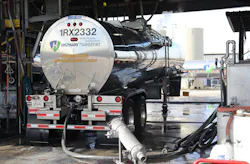
Rooted in tank repair
Greg spent nine years with Slade’s and a local competitor after studying welding at ITI Technical College. And he was the first person Penske Corp. hired in 1989 to help establish Penske Tank in Baton Rouge, where he worked in the same facility through two name changes—first Pentron and then Polar Service Center, which later relocated to Port Allen, Louisiana.
He stayed with PSC until 2014—when he decided a change was in order.
“A friend from Polar, who was the director of maintenance for Service Transport at the time, said ‘Why don’t you go into business for yourself? I’ll give you everything I’ve got,’ and I thought, ‘Why not?’ So that’s how I got started. I went to the bank with a briefcase, and a folder with a business plan, told them I needed ‘x’ amount of money, they gave it to me, and here we are now.”
After 37 years serving the tank trailer industry—and 46 years overall—Greg is still the person in the front row at inspection workshops, absorbing as much information as he can, and hoping to pass on all he knows to the next generation, including his little girl. “Greg’s been in the industry a long time,” said Josh Noworatzky, Sprint Transport president and CEO. “He knows what he’s doing, and more importantly, what not to do. Sometimes, especially in our industry, the key is understanding what not to do, whether it’s in repairs, regulations, or anything else.
“And Ashton has done a great job of learning from her dad, as well as continuing to get more education, and making sure that she knows not only the historical way things have been done, but also that she’s very in touch with new processes, procedures, and technologies.”
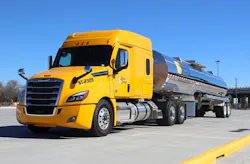
Passing the torch
Greg initially was reluctant to bring Ashton on. After witnessing her ascent to highly capable vice president, he’s thoroughly convinced LBS is in good hands going forward. And Ashton, now a DOT-certified HM-183 inspector and the last word on LBS tank repairs, credits her industry success to the three years spent in the shop—which she still considers a refuge from often-hectic office life. “You see what these guys go through, and learn some jobs aren’t as easy as we may think,” Ashton said. “Until you’re the one doing the job, you don’t realize what it takes to fit everything together just right. That really made me appreciate our guys.”
Ashton inherited Greg’s thirst for knowledge, too. She studies the “regs” religiously, frequents new classes, and utilizes services like Sentry Road and DOT Training Solutions to keep her six-man shop staff safely informed, making her, and LBS, a valuable resource for elite bulk haulers. “I can honestly say she knows more about what we call ‘the book,’ with all the regulations, than anyone I’ve met,” Noworatzky said. “So, when I have a question, I call her.
“She’s become a go-to source for regulatory issues.”
Ashton’s also committed to maintaining a family-oriented environment. She’s always willing to track down an elusive answer, or even watch a desperate driver’s dog, and her 10-year-old daughter, Hope, is a regular visitor to the shop—where she’s already starting to show interest.
“We’re always willing to go the extra mile,” Ashton confirmed.
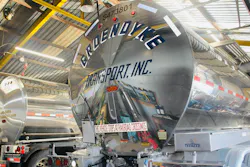
‘Extra-mile’ express care
With three bays for maintenance and repairs and external positions for inspections, testing, and light work, LBS can handle up to eight trailers at once. And due to its growing reputation for consistently providing quality repairs big and small—and responsive, safety-focused service—they stay busy, turning out 30-plus tanks per month from a 2-acre location on Hwy. 30, where Sprint, Service Transport, Andrews Logistics, Dana Transport, Groendyke Transport, Heniff Transportation Systems, and Quality Carriers all have nearby terminals.
“Louisiana is a unique market,” Ashton said. “Here, we do business with people—not companies—and after 30-plus years in the industry, dad knows everyone.”
Chemical tank trailers, primarily stainless-steel DOT 407s, account for 95% of LBS’s business, so the R-stamp shop’s most common heavy repairs involve jacket damage, staining, and pitting—from which Greg says no tanker is immune, whether it’s made of 316L, 2205 lean duplex, or even composites. “They’ve tried over the years to improve the alloys for better corrosion resistance, but nothing is bulletproof,” he said. “There are chemicals that will eat through anything. So pitting is still a big issue, and there isn’t a lot of tolerance for it because the barrels aren’t that thick to begin with. So anytime we see pitting, we weld them up, polish them off, and hydro the tank, because one pit is going to turn into a hundred.”
“Express” work, like repairing fenders, ladders, landing gear, and walkways, is the company’s most popular service, Greg said. They can turn around small jobs faster than big shops, keeping trailers on the road; and pull-up customers with leaky valves or blocked vents are always welcome. “I see more cosmetic issues today than I’ve ever seen in my life,” Greg said. “And a lot of it is just carelessness in parking lots or plants, like forgetting to lock the kingpin.”
LBT also can work inside local plants, where most carriers aren’t authorized to repair trailers; and “extra-mile” services include helping new carriers set up in the area, painting frames and suspensions—for external corrosion resistance—cleaning hangers, and greasing bearings.
“That’s how the trailer gets down the road a little farther,” Greg said.
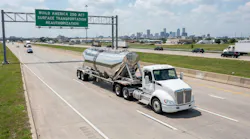 The BUILD America 250 Act includes a significant 10% dry bulk axle variance favored by tank truck stakeholders, including NTTC leaders, alongside reforms supporting vehicle weight limits, workforce development, and safety regulations, though some provisions face opposition.
Essential service, shared success
Sprint started its St. Gabriel terminal one year before LBS opened its doors, and the support LBS provides has been “instrumental” in Sprint’s growth to 90 trucks serving the region, Noworatzky said. LBS doesn’t “nickel and dime” customers on quotes, repairs are done right, and always on time, and that reliability allows Sprint to reserve its shop for trailer preps.
“In over a decade of experience, I’ve never sent anything back,” Noworatzky said.
The company’s expertise even includes liner repairs and consultations. LBS recently identified an issue with one of Sprint’s lined tankers with help from Logan Ballard, Greg’s son, a facility manager with Sherwin-Williams who also is a certified coating inspector. “We’d already been dealing with it for six months,” Noworatzky said. “With Ashton’s help, I tracked down answer in six weeks.
“That was extremely helpful—and probably saved me a lot of money.”
In turn, Sprint is happy to push LBS customers’ trailers to the front of the line at its Trident Tank Wash facility, a convenience Greg and Ashton appreciate greatly. In more than 11 years in business, LBS has a spotless OSHA record, and they intend to keep it that way, so the company maintains strict policies on what it will and won’t work on, and dirty tank trailers top the list.
“It takes a village for this whole industry to work,” Noworatzky said. “It’s not about one customer, one vendor, or one hauler. We must work together to ensure everything is done correctly. We all want our equipment to be held to the highest standard, and we want to be safe, because our families drive up and down the road every day. So, we need the right people fixing it—the ones we know will do it right and refuse to put something on the road that’s unsafe.”
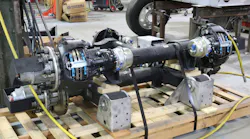 With a rich history rooted in Springfield, Missouri’s manufacturing legacy, Ridewell Suspensions continues to lead in heavy-duty suspension technology by investing in advanced automation, maintaining strong industry partnerships, and focusing on specialized markets like the tank trailer sector.
Complacency isn't an option
Old-fashioned, family-focused values—integrity, inspired purpose, and shared responsibility foremost among them—are at the heart of LBS’s success. That’s why it’s gone from startup to essential service provider, nearly “quadrupling” business since 2015, Greg estimated, and why it’s aiming to expand at the request of customers. “I don’t ever want to be complacent,” he emphasized. “So, I’m always pushing myself, trying harder, and doing more.”
The goal now is to begin servicing liquefied petroleum (LP) tankers.
LBS already is certified to do the work in Louisiana. The next steps are securing Texas Railroad Commission certification—since so many trailers travel between the two states—and finding a suitable location to house 331s, which don’t fit as easily in the company’s current facility.
“We’re working on another shop now,” Ashton shared. “Hopefully, in the next year or so, we’ll get that going.”
And LBS customers plan to keep them plenty busy in the meantime.
“LBS has been an outstanding partner for us,” Vineyard concluded. “When we’re in a bind, they’ve consistently stepped up and adjusted to meet our needs, often on short notice. The quality of their repair and maintenance work has been excellent, but just as important is how they approach the relationship. They treat us like extended family—staying in touch, checking in proactively, and going the extra mile to support our team.
“That level of commitment and personal investment is hard to find and makes a real impact on our operation.”
About the Author
 Jason McDaniel
Jason McDaniel
Jason McDaniel, based in the Houston TX area, has more than 20 years of experience as an award-winning journalist. He spent 15 writing and editing for daily newspapers, including the Houston Chronicle, and began covering the commercial vehicle industry in 2018. He was named editor of Bulk Transporter and Refrigerated Transporter magazines in July 2020.