Exosent extends MC-331 safety with P.S.I.’s TireView
Key Highlights
- The new integration of TireView and TireView Live systems on Exosent LPG trailers provides real-time tire pressure, temperature, and mileage data to prevent blowouts and improve maintenance planning.
- The advanced monitoring systems enable early detection of tire issues, including overheating and leaks, allowing drivers to take preventive action before failures occur.
- GPS tracking integrated with tire monitoring offers comprehensive asset management, especially during drop-and-hook operations where visibility is limited.
- The new technology is available for factory installation or retrofitting, helping fleets manage thousands of tires efficiently and reduce costly blowouts.
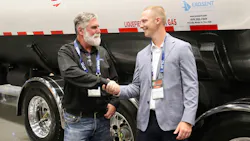
OKLAHOMA CITY—Exceptional roll stability is one of the key safety attributes built into every one of Exosent Engineering’s low-profile MC-331s. A newly upgraded partnership is enhancing that advantage.
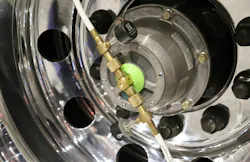
Exosent and Pressure Systems International (P.S.I.) debuted a new integration here at National Tank Truck Carriers’ Tank Truck Week 2026 that adds P.S.I.’s TireView and TireView Live smart monitoring systems to the manufacturer’s LPG tank trailers, which have featured the Clarience Technologies company’s Meritor Tire Inflation System (MTIS) and ThermAlert wheel-end heat warning system for over a decade.
The addition of advanced asset monitoring provides bulk fleets with robust, real-time insights into tire health, trailer mileage, and maintenance needs; and reinforces Exosent’s safety-focused foundation, which includes a highly recognizable pressure-vessel design with a lower center of gravity that boosts fuel efficiency, payload capacity, and stability.
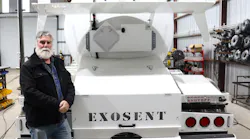
“You can tip an Exosent,” Uv Doron, founder of the Millican, Texas-based trailer manufacturer, told Bulk Transporter. “But we want it to be much harder to do—and we never want it to happen.
“So the integration of the new system is very valuable to us.”
A standard for safety
Exosent recently earned the 2026 NPGA Safety Award for its ongoing contributions to advancing safety in the propane and bulk transport industry. The manufacturer’s specialized trailers have gained steady traction among innovative bulk fleets looking to adopt safer, more driver-friendly operations. And ensuring tires remain correctly inflated is a critical component of that safety profile.
“Every Exosent trailer, regardless of whether the customer asks for it or not, comes standard with P.S.I.’s tire inflation system, because one of the best ways to keep a trailer from rolling over is to ensure the tire pressures are correct,” Doron said. “And a driver walking around and kicking the tires doesn’t tell you if they’re at 80 psi or 110 psi. The P.S.I. system does do that.”
Jim Herzog, P.S.I.’s regional sales director, noted that the alignment between the two companies is driven by a shared commitment to building reliable, high-quality equipment that lasts.
“The cool part about Exosent is they have an owner who cares about what he does, what he builds, and what he puts into the industry,” Herzog said. “He believes in these trailers 100%, and he’s all about doing what’s right for his customers and using technology to make sure Exosent’s trailers are prepared to put thousands and thousands of safe miles on the road.”
Taking integration further with TireView
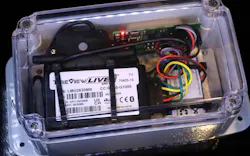
While maintaining steady air pressures is critical for hazmat carriers, the addition of TireView gives fleets a more comprehensive window into their assets. The smart technology—which includes digital ThermAlert sensors—utilizes cellular connectivity to transmit data to the driver or the carrier’s back office, detailing pressure and temperature events in real time.
“With tire pressure monitoring, we’re able to track when, where, and how fast the leak is occurring,” Herzog explained. “Have you had a puncture for a month, but the inflation system kept the tire inflated? So we can go further when it comes to fixing these tire issues. And, with that, we tie in GPS, and now we can track the mileage and maintenance schedules.”
For Doron, the decision to offer TireView and TireView Live as an option was an easy one, providing operators with actionable data that goes beyond basic inflation. Because the tire inflation system communicates with the axle, it can quickly detect and transmit early warnings of overheating. “When P.S.I. approached us and told us they also have a GPS monitoring system with mileage-capturing technology, it was a no-brainer,” Doron maintained.
“Now the carrier will know something is wrong—and the driver can pull over before they have a fire on a propane trailer.”
Efficiency through asset tracking
Beyond crisis prevention, GPS integration helps bulk haulers optimize preventative maintenance—without disrupting service to their customers, Herzog said. Unlike tractors, which are frequently equipped with telematics, tankers often lose visibility during drop-and-hook operations.
TireView bridges that gap by capturing exact mileage over time.
“Many carriers offer GPS on their tractors, but what happens when the tractor gets disconnected from the trailer?” Doron said. He noted that tracking the mileage via the trailer allows carriers to better understand maintenance requirements and their warranty coverage.
The upgraded system debuted on a Puryear Tank Lines trailer inside The Jack Olsta Company’s booth. The North Carolina-based carrier, which operates hundreds of dry bulk, liquid, and compressed gas tankers, is one of the first companies to implement the integrated inflation and GPS package on an Exosent trailer. But Doron expects demand to grow as the ability to digitally monitor total tanker health continues to evolve into an essential tool.
 Chris Spear, ATA president and CEO, listens to Jim Sharkey, P.S.I. president, during a tour of P.S.I.'s San Antonio plant.
TireView is available now for Exosent customers, who can have it factory-installed or retrofitted to existing MC-331s.
“If you have 1,000 trailers, how many tires do you have on the road?” Herzog asked. “Thousands more. And how do you manage all those tires? Now we can go in, and in under a minute, tell you which tires across your entire fleet are low, and need to be attended to before the day starts.
“Obviously, tank trailers are expensive assets—and the more expensive the equipment is, the more serious a blowout can be.”
About the Author
 Jason McDaniel
Jason McDaniel
Jason McDaniel, based in the Houston TX area, has more than 20 years of experience as an award-winning journalist. He spent 15 writing and editing for daily newspapers, including the Houston Chronicle, and began covering the commercial vehicle industry in 2018. He was named editor of Bulk Transporter and Refrigerated Transporter magazines in July 2020.