More than a commodity: LMR stabilizes the bulk supply chain
Key Highlights
- The bulk trucking industry appears to be recovering, with increased demand, rising rates, and tighter capacity, benefiting resilient operations.
- LMR’s industry expertise and strategic partnership with Grammer Logistics enable tailored, efficient bulk supply chain solutions.
- Integration efforts focus on expanding capacity in specialty chemicals and hazardous materials, addressing market needs amid tightening supply chains.
- Technological innovations and strategic collaborations are key drivers in navigating industry challenges and fostering growth.
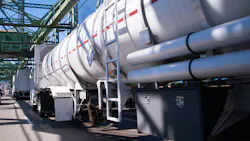
The trucking industry is finally recovering. The demand upticks are still sporadic across freight sectors, but capacity is tightening with carrier and driver exits and new regulatory constraints, rates are steadily increasing, and load boards are filling up—all welcome news for beleaguered bulk haulers.
Even better, the sector they serve is among the fortunate ones.
“Our freight business was up 17% in the first three months this year, compared to the second half of 2025, and everybody is feeling it,” said Heston Hodges, president and CEO of LMR, a bulk logistics specialist based in Baton Rouge, Louisiana. “Volumes are going up, shipper networks are stressed, carrier lead times are growing, and we are seeing a total rate update.
“Carriers haven’t been able to ask for increases for three years—but they’re making headway.”
LMR, which manages more than $100 million in bulk cargoes annually, is uniquely positioned to help both producers and fleet operators adapt to evolving conditions, Heston asserted. Founded in 1981 by Terry Hodges, Heston’s father, LMR focused on liquid chemicals from the beginning, so it holds deep-rooted expertise and industry relationships; Terry previously ran a tank fleet, so the company understands and cares about its carrier partners; and, as part of Grammer Logistics since 2022, LMR can access the additional capacity shippers desperately require. “Without one or the other, we’re nowhere,” Heston said. “We provide a service, but the trucking companies must do what they do for us to matter. So, it’s always been about building connections and really accommodating carriers.
“We don’t treat them like a commodity.”
Now, Grammer’s new chief executive officer is intent on bolstering the combined operation’s position in the bulk sector by accelerating the integration of LMR’s third-party logistics capabilities, including managed transportation and freight brokering, with Grammer’s asset-backed truck and transloading business, which includes 400 tractors and over 700 trailers, to create a one-stop-shop supplier of bulk supply chain services that is primed for a long-awaited recovery. “Grammer has always been strong in the ammonia and NGL spaces, but we’ve pushed hard on specialty chemicals, and we have grown in that area,” said Jeff Bullard, a logistics veteran who came out of retirement last fall to lead the private equity-owned company. “And that market, specifically, is ripe for us to apply the combined Grammer-LMR portfolio. So, we’re actively pursuing new business and having success.
“This will be LMR’s best year since joining Grammer.”

Navigating the nuance
LMR, an acronym for Logistics Management Resources, started out as U.S. Comex, or CTX, which stood for Commodity Exchange and Committed to Excellence. The company obtained the first active brokerage license (third overall) from the old Interstate Commerce Commission in support of Uniroyal. Terry formed LMR in the 1990s—when he started working with Dupont and Dow, sold his 50-truck fleet to Schneider, and became the first 3PL in the American Chemistry Council’s Responsible Care Partner program—and eventually moved all his customers to the new logistics entity. “LMR’s team is unique,” Bullard emphasized. “They’ve been in this world for decades, and they focus on only one area.
“So, regardless of what the market does, we can help navigate it—and do so with reduced volatility and expense.”
LMR today serves hazardous-materials shippers and mid-sized bulk carriers with a dedicated team of 50 employees at offices in Louisiana and Michigan, and customer sites across the country. LMR oversees carrier compliance, capacity forecasting, rate negotiations, order tendering, and invoicing for shippers; assists carrier partners with insurance requirements, customer networking, and route scheduling; and automates daily updates for both.
“We fill a unique role in the supply chain, so we understand both shipper and carrier viewpoints—and we consider both our customers,” Heston emphasized.
Working with LMR, carriers can “build a book of business” with leading chemical manufacturers; and shippers can access multimodal transport options, and a highly tailored transportation management system developed in house and easily customized for individual applications using EDI connections and system integrations with multiple platforms. “LMR’s experience level in bulk liquids transportation is second to none,” Grammer CCO Patrick Maher said. “That lends itself to keeping issues in house vs. passing them back to the customer. Carrier partners also value a hands-on approach and being able to speak directly with people. While simple, these things increase service levels and decrease unnecessary costs.”

Synergy in motion
The integration of Grammer and LMR already is unlocking synergistic benefits for both businesses and their mutual customers. LMR expanded its capacity to handle ammonia and industrial gases, and its understanding of carrier pain points; and Grammer expedited its transition into a highly diversified provider of supply chain solutions by adding more specialty chemical services.
Bullard is committed to completing the transformation.
With a background in freight management and complex supply chain coordination at General Motors and Penske, the logistics veteran brings a new asset-light perspective to a truck-based enterprise. “We see LMR’s skillset as an under-leveraged proficiency,” said Bullard, who was lured out of retirement by the challenge, the timing, and the family values instilled by Shorty Whittington, who founded the company in 1968 in Grammer, Indiana. “I spent a lot of time in strategic consulting, and supply chain strategy specifically, and they want to look at the challenges the market is throwing at us differently. So, my experience lined up with what ownership felt was needed at this point in the company’s growth trajectory.”
 Img 3874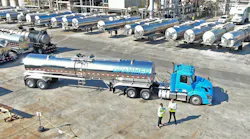
By fully embracing and incorporating LMR’s abilities, Grammer can attack logistics problems historically outside its purview, Bullard said. He also brings a fresh take on pricing, and how to leverage modern technologies like AI to augment supply chain efficiency, Heston shared. “Grammer is a legacy trucking company, so it many ways that’s how we still operated.
“Jeff has a much different view of logistics management.
“He understands that having assets in-house is a real advantage for LMR’s clients, especially as capacity tightens. So, we run separate platforms—but we can leverage each other’s strengths. It’s a win-win.”

Primed for recovery
The company’s efforts over the last six months are well-timed, too.
As capacity is tightening and freight rates are rising, truck tonnage also is increasing, posting the largest year-over-year gain in nearly four years in February, according to an FTR report. That combination has shippers wondering what’s next—and scrambling to strengthen “right-sized” networks, Heston maintained. “Grammer has a strong geographic footprint, driver base, and equipment profile,” Maher added. “However, customers continue to ask for our assistance in areas or products that may not be in our core offering, and LMR is allowing us to provide a capacity solution in cases where we had to say no previously.
“That’s really starting to take shape, especially with capacity tightening to begin the year. And, as we look at the near term, there are several opportunities for Grammer to introduce LMR’s managed services to customers as a strategic path to optimizing their supply chains.”
Grammer’s volumes rose year-over-year in the first quarter, Bullard said, giving him confidence the market is “coming back.” Heston is cautiously optimistic the upturn isn’t simply a seasonal surge—and certain rates will stay “inflationary,” which he says is good for all stakeholders. “It’s going to foster a healthier environment,” Heston insisted. “We’ve seen trucking capacity exit the market for a variety of reasons, including the financial wherewithal of a carrier base that’s been squeezed by rising operating costs and falling freight rates, leaving them unable to reinvest in their businesses, and that’s bad for everyone.”
“So rate increases are a long time coming, but companies like ours can help offset those increases.”
About the Author
 Jason McDaniel
Jason McDaniel
Jason McDaniel, based in the Houston TX area, has more than 20 years of experience as an award-winning journalist. He spent 15 writing and editing for daily newspapers, including the Houston Chronicle, and began covering the commercial vehicle industry in 2018. He was named editor of Bulk Transporter and Refrigerated Transporter magazines in July 2020.