Trimble Tech win optimizes tank truck interest in Optym’s LoadAi
Key Highlights
- Optym's software can be customized to handle the specialized constraints in bulk logistics, such as prior cargo compatibility and tank cleaning requirements.
- The LoadAi platform provides real-time, mathematically driven recommendations, enhancing traditional dispatch methods reliant on spreadsheets and intuition.
- A new fuel optimization feature analyzes route efficiency and fuel prices to reduce costs and improve route planning holistically.
- Optym guarantees a five-times ROI, promising significant cost savings and continuous algorithm improvements if targets are not met.
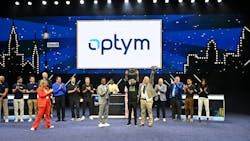
Tank truck operators already were expressing interest in Optym’s innovative planning optimization software, which is new to the truckload space. The technology company’s win in the Industry Partner Showdown at the 2025 Trimble Insight Tech Conference only amplified their curiosity.
“They want to know if we have the constraints to optimize specialized planning, and pre- and post-load activities,” Shaman Ahuja, Optym deputy CEO, told Bulk Transporter. “And for us, the freight planning piece is the same. It’s all a matter of matching the commodity to the trailer and driver. They view it as a totally different problem, because the commodities are new to us, but we attract everything to a network, so it’s just a new set of constraints and rules around a specific asset class. The optimization problem, and the underlying model, are the same.
“So, the conversations have been, ‘Hey, you don’t do bulk. Can you?’ And we say yes because, really, we can do anything.”
The Dallas-based software developer this year proved it can sell its AI-powered transportation technology as well as anyone by placing first in Trimble’s Shark Tank-style, live-demo competition, which Rose Rocket won last year and Luma Brighter Learning dominated in 2023. Now Optym is aiming to increase adoption of its LoadAi dispatch and planning solution among truckload fleets after introducing the cloud-based software-as-a-service to LTL customers in summer 2024. The company recently released a new fuel optimization feature and revealed a new integration with Trimble’s TMW.Suite transportation management system (TMS) at this year’s Insight conference, which ran Nov. 16-18 in New Orleans.
“We now have three signed [truckload] customers, we’re integrating with more TMS platforms, and we’re starting to hit our stride,” shared Matt Muntzenberger, Optym vice president of sales.

Linear truckload optimization
Shaman’s father, Optym CEO Ravi Ahuja, founded the company in 2000 and initially focused on using his algorithms to optimize track switching and car sorting in the railroad industry. Optym later pivoted to serving airlines and partnered with Southwest Airlines before selling its Sky Suite platform to Amadeus in 2020 to focus on growing its less-than-truckload platform.
“We’ve been in the LTL space for 15 years and have many of the top 20 LTL carriers as customers,” Shaman said. “Our largest LTL customer has over 10,000 trucks. So now we are taking the same architecture and models that support those customers and introducing them to truckload carriers.”
See also: Trimble, partners unbox new technology
Optym’s LoadAi platform uses linear programming to enhance human decision-making with concrete, future-focused calculations. “Linear optimization tells you, given the current situation, objectives, constraints, and other variables, this is the best possible decision given the information provided,” Muntzenberger explained. Their approach delivers “glass-box” visibility into decision-making, allowing load planners to compare their choices to the mathematically generated recommendations and update the system’s engine to further optimize outcomes, he added.
Critical LoadAi capabilities include driver planning, freight sourcing, and load consolidation—all aimed at helping carriers reduce empty miles, optimize dispatch decisions, and scale productivity across their networks. “Truckload dispatch has always relied on spreadsheets, gut instinct, and heroes behind the desk,” Shaman said in a news release. “LoadAi lets planners and dispatchers combine their knowledge with real-time optimization.
“It’s like using a calculator instead of doing long division in your head—faster, more accurate, and far less stressful.”
Specialized problem solving
Optym already is working with prospective clients to optimize its engine for tanker, refrigerated, and flatbed operations, Muntzenberger said.
“If you have a problem, we are going to help,” he asserted. “If it’s worth solving, we will figure it out, and the way our algorithms work, it’s fairly easy to add in different constraints and variables, or weight factors a little bit differently, to provide solutions for these more unique use cases.”
See also: Trimble introduces cloud-native TMS
Bulk transportation constraints, like prior cargo compatibility and tank cleaning requirements, make Optym’s job easier, Shaman maintained. “It narrows the solution space, so there is less variability,” he said. “Every driver can’t take every load, and every asset can’t haul every commodity. And when there are more restrictions, there are fewer options for the model to sift through to find the best solution.” Additionally, load sequencing already exists within LoadAi’s driver planning model, which enhances productivity by aligning load assignments with driver hours, preferences, and compliance requirements, Shaman said.
“I see the exact same model working for the bulk space,” he said. “It’s basically determining, if you hauled gasoline first, you can’t haul water next. So, we can support specialized operations. Now it’s just a matter of understanding the specific rules they are giving us.”
Guaranteed investment return
Fuel optimization is the latest LoadAi feature, which aims to lower total fuel spend by selecting optimal refueling locations and quantities based on real-time prices and route efficiency. “If you’re running out of gas, other systems will tell you where to go for the cheapest price on the route,” Muntzenberger said. “We’re taking it further and saying, ‘Go here, but only partially fill the tank because you’re only 100 miles away from the drop and you’re running out of hours. Then you can take a rest and fill up at your favorite Love’s, which is more rural.
“So, it’s planning more holistically, based on the entire route, instead of just, in the moment, ‘I need gas, where is it cheapest?’”
Optym still is improving the new feature. Goals include integrating the system with fuel retailers to deliver real-time pricing and comparing recommendations to driver decisions to determine bottom-line impact. The company also continues to upgrade the larger LoadAi platform with new agentic AI and machine learning capabilities that advance truckload optimization economically.
System APIs and endpoints are pre-built, so implementation is relatively easy once mapping and engine calibration are complete, Muntzenberger said. And Optym allows fleets to test LoadAi—which is compatible with any TMS—in several different ways, depending on preference. Options include fully integrated trial runs, offline pilots, and case studies that allow interested parties to compare Optym’s profit potential to current planning processes.
“A big differentiator is we promise a five-times guarantee on ROI,” Muntzenberger concluded. “So, for every dollar you spend, you can expect to save $5, and we back that up. If a client signs with us and feels they’re not getting a 5x return on investment, we’ll run a free study to validate results.
“And if they’re not seeing the promised ROI, we’ll enhance the algorithms or reduce the SaaS fee.”
About the Author
 Jason McDaniel
Jason McDaniel
Jason McDaniel, based in the Houston TX area, has more than 20 years of experience as an award-winning journalist. He spent 15 writing and editing for daily newspapers, including the Houston Chronicle, and began covering the commercial vehicle industry in 2018. He was named editor of Bulk Transporter and Refrigerated Transporter magazines in July 2020.