FMCSA overrides NTTC’s safety concerns to grant jet fuel waiver
Key Highlights
- The rule permits waivers for drivers transporting limited quantities of jet fuel, supporting agricultural aviation operations during peak seasons.
- Industry groups and agricultural operators support the waiver, citing reduced costs and improved driver availability, while safety concerns are addressed by existing training requirements.
- FMCSA maintains that the waiver will not compromise safety, as it aligns with current regulations for fuel transport and security screening processes.
- The regulation aims to balance safety with operational efficiency, responding to driver shortages and industry needs without lowering safety standards.

The Federal Motor Carrier Safety Administration today posted a final rule that amends federal safety regulations to allow states to waive the hazardous materials (HM) endorsement requirement for holders of Class A CDLs who transport no more than 1,000 gallons of aviation-grade jet fuel in support of seasonal agricultural aircraft operations.
The proposed rulemaking to amend 49 CFR Part 383, first posted in December 2024, received 64 comments, of which 42 “fully supported” the rule, 20 “generally supported” the rule with modifications—mainly to expand the waiver’s applicability to other CDL classes, FMCSA reported—and only two opposed the rulemaking, with one of those coming from an anonymous source.
National Tank Truck Carriers was the only named dissenter.
The trade association voiced concerns raised by members of its Safety and Security Council, Workforce Committee, and Energy Services Committee regarding a range of safety matters, including driver training, incident response and reporting, and equipment safety, stating the proposed rulemaking would exempt certain drivers from having to complete the four-step process of obtaining an HM endorsement, including a theory training module, a written exam, a TSA Security Threat Assessment, and, if applicable, paying a state driver licensing agency fee.
“It is no secret that safety is at the heart of everything NTTC does, especially given the nature of the often-hazardous materials commodities transported by NTTC carriers,” Will Lusk, NTTC director of education and government relations, wrote in a Feb. 3, 2025, letter to FMCSA. “These carriers have expressed concern that, if approved, FMCSA-2024-0121 would open the door for even more use of inexperienced, undertrained and unqualified HM drivers that will almost certainly result in additional risk exposure for all parties involved and the motoring public. Given the inherent dangers hauling hazardous materials, an accident involving even less than 1,000 gallons of fuel can still result in catastrophic consequences.”
Lusk concludes in his remarks that “approval of FMCSA-2024-0121 would allow unscreened and under-trained commercial drivers to haul volatile aviation fuel on America’s public highways. This proposed rulemaking does not achieve an equal level of safety currently set for the public; therefore, NTTC urges FMCSA to deny this proposed rulemaking.”
FMCSA: HM waiver won’t reduce safety
FMCSA responded to NTTC’s safety and security concerns in its final-rule notice.
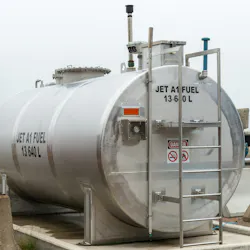
Regarding the safety concerns related to transporting fuel, the agency said it does not expect the waiver option from the HM endorsement to diminish safe commercial motor vehicle operation because training and testing still are required under 49 CFR Parts 172 and 177, which fall under the Pipeline and Hazardous Materials Safety Administration’s regulations for training and placarding. “The testing and training requirements under PHMSA's regulations are distinct from the testing and training requirements for CDLs and HM endorsements under Part 383 and are not affected by this rulemaking,” FMCSA said. “Furthermore, non-participating states would still require an HM endorsement for drivers crossing state lines.”
Regarding security concerns related to vetting drivers, FMCSA argued the waiver won’t negatively impact safety because the diesel fuel waiver already codified in Section 383.3(i) allows drivers to transport limited quantities of hazardous materials under certain conditions without an HM endorsement. “The diesel fuel waiver has been in place for over 30 years without a negative impact on safety,” FMCSA stated. “Because jet fuel has a similar chemical composition to diesel and the conditions under this rule for transporting jet fuel without an HM endorsement are identical to those for transporting diesel without an HM endorsement, a jet fuel waiver option is expected to maintain an equivalent level of safety.”
FMCSA also disagreed with NTTC’s assertion that the waiver will increase environmental risks posed by fuel spills; and addressed NTTC’s contention that there is a “low likelihood” fueling racks will authorize non-HME credentialed drivers to enter loading facilities, even with the waiver.
“A fuel rack, as a private wholesale distribution facility for fuel products, can establish its own entry requirements, such as requiring a CDL with an HM endorsement,” FMCSA responded. “However, agricultural aircraft operation drivers who qualify for the waiver may have alternative options for obtaining jet fuel, such as loading from a storage tank owned by their company rather than relying on a fuel rack.”
Support emphasizes efficiency, driver availability
Waiver supporters included 41 businesses, primarily agricultural aircraft operators; associations such as the Arkansas Trucking Association and National Agricultural Aviation Association; and the Arkansas Department of Transportation, which asserted that waiving the HM endorsement will reduce employer expenses and provide for additional new drivers, while maintaining “appropriate” controls.


“Many commenters said that finding and retaining drivers with an HM endorsement for seasonal work, in addition to the claimed shortage in qualified drivers, is especially difficult and costly,” FMCSA explained. “Many business owners or agricultural aircraft operators explained that some employers take on the additional cost of training drivers who do not have an HM endorsement.
“Retention issues were also identified as challenging because drivers often leave for higher-paying jobs.”
About the Author
 Jason McDaniel
Jason McDaniel
Jason McDaniel, based in the Houston TX area, has more than 20 years of experience as an award-winning journalist. He spent 15 writing and editing for daily newspapers, including the Houston Chronicle, and began covering the commercial vehicle industry in 2018. He was named editor of Bulk Transporter and Refrigerated Transporter magazines in July 2020.