Carrier selection no longer a simple procurement decision
Key Highlights
- The Montgomery ruling removes federal preemption for state-law claims against freight brokers, increasing their legal exposure and accountability.
- Transportation companies must shift from one-time carrier qualification to continuous performance monitoring, safety checks, and compliance evaluations.
- Enhanced transparency in broker-carrier relationships will be demanded, fostering stronger partnerships and shared responsibility for safety standards.
- Technology tools like TMS, scorecards, and compliance platforms are vital for managing complex networks but must be supported by clear governance and standards.
- Bulk transportation industry practices around safety and documentation can guide broader adoption of risk-focused carrier oversight in the freight sector.

The Montgomery ruling has generated a lot of discussion across the transportation industry. Most of it has focused on freight broker liability, legal exposure, and the potential impact on insurance costs.
Those are important questions. At its core, the Supreme Court held that state-law claims against freight brokers for negligently selecting a carrier are not preempted by federal law. Brokers can no longer rely on the FAAAA to knock out these cases early. That changes the accountability landscape.
But for those of us who work with shippers and transportation leaders every day, the more immediate question is what this ruling should change inside our own operations.
Beyond traditional procurement decisions
Carrier selection has traditionally been driven by a familiar set of factors: price, capacity, geographic coverage, service levels, and on-time performance. Those measures remain essential, but they are no longer enough. As transportation networks grow more complex, selecting a carrier is increasingly an exercise in operational risk management, not simply a procurement decision.
That shift began well before Montgomery. The pandemic exposed how quickly transportation disruptions could ripple across supply chains. Since then, geopolitical instability, labor shortages, extreme weather, cybersecurity threats, and changing regulatory requirements have expanded the range of risks stakeholders are expected to manage.
The Montgomery ruling adds another dimension by raising a basic but important question: How well do we really know the organizations moving our freight?
For bulk transportation, this is not a new concern. Tank truck carriers and bulk shippers have long operated in an environment where safety performance, equipment condition, driver qualifications, product compatibility, and regulatory compliance are fundamental to doing business. When you are transporting chemicals, food-grade products, petroleum, or other sensitive materials, the consequences of selecting the wrong carrier can extend far beyond late delivery.
Shifting to continuous carrier evaluation
What is changing is the level of scrutiny being placed on carrier-selection decisions and the growing expectation that due diligence be consistent, documented, and ongoing.
Many companies still treat carrier qualification as an onboarding exercise. A carrier meets the requirements, completes the paperwork, and is added to the network. Unless a major performance issue occurs, that decision may not receive a comprehensive review for several years.
That approach no longer reflects the realities of modern transportation.
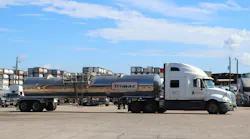 Trimac Transportation’s recent addition of California Freight reflects a broader strategic shift across bulk transportation, where securing specialized assets and capabilities—such as ISO tank services and tank-cleaning capacity—is now more critical than simply acquiring trucks.
 From left to right, Fleet Maintenance’s John Hitch, Bulk Transporter’s Jason McDaniel, FleetOwner’s Jade Brasher, and Trailer/Body Builders’ Kevin Jones gather for a panel discussion to break down the American Transportation Research Institute’s report on the rising costs of trucking in this episode of The Fleet Lead.
Carrier operations are constantly changing. Companies add equipment, enter new markets, expand service offerings, hire drivers, and adjust their operating models. Insurance coverage, safety performance, and compliance records can change as well. A carrier that met every requirement two years ago may present a very different risk profile today.
Carrier qualification therefore cannot be viewed as a one-time event. A process for continuously evaluating performance, safety, compliance, insurance, equipment practices, and other factors that could affect operational risk is essential. So, too, is a clear record of how those evaluations informed the decision to use a particular carrier. In a post-Montgomery environment, the ability to demonstrate what was known and decided at the time of selection is no longer optional.
Demanding transparency in broker relationships
This does not mean eliminating freight brokers or reducing the number of transportation partners. Brokers continue to play a critical role by providing access to capacity, market knowledge, and flexibility that many shippers cannot efficiently develop on their own.
What will change is the level of visibility shippers expect within those relationships. The ruling primarily lands on brokers, but the practical effect is that shippers who rely on them will demand more transparency into how carriers are selected and monitored. They will want to understand the standards applied, how often qualifications are reviewed, and what happens when a carrier no longer meets the bar.
That transparency should not be viewed as a threat to the broker relationship. Greater visibility can create stronger partnerships by ensuring that shippers, brokers, and carriers understand the standards they are expected to meet and share responsibility for maintaining them.
Balancing technology with sound governance
Technology will also play an important role. Transportation management systems, carrier scorecards, and compliance platforms now provide access to information that was difficult to collect and evaluate even a decade ago. These systems help transportation teams monitor performance, identify emerging risks, track documentation, and maintain a clear record of how carrier decisions were made.
That capability is increasingly important as transportation networks grow more complex. Many organizations now work with hundreds of carriers across multiple regions, modes, and regulatory environments. Managing that level of complexity through spreadsheets, disconnected systems, and periodic manual reviews is becoming increasingly difficult.
Technology, however, is not a substitute for sound governance.
A dashboard cannot establish an organization’s risk tolerance, determine which performance issues require corrective action, or decide when a carrier relationship should be reconsidered. Companies still need clearly defined qualification standards, ownership, review processes, and accountability. Technology makes those processes more visible and manageable, but it cannot create them.
Bulk transporters can show the way
The bulk transportation industry should be leading this broader conversation. Tank truck carriers already understand that rigorous safety programs, equipment inspections, specialized driver training, and detailed documentation are not administrative burdens. They are essential for safe, reliable operations.
As expectations around carrier oversight continue to evolve, the practices that have long defined bulk transportation may become increasingly relevant across the broader freight industry.
The lasting impact of the Montgomery ruling may not be measured solely by future legal decisions. Its greater significance may be that it accelerates a shift already underway: transportation strategy and risk strategy are becoming inseparable.
Companies that recognize this will be better prepared for regulatory or legal scrutiny. They will also be better equipped to make informed carrier decisions, build stronger transportation partnerships, and create more resilient supply chains. In practical terms, that means reviewing broker agreements for visibility and documentation rights, ensuring continuous monitoring is built into the relationship rather than treated as a one-time check, and bringing carrier risk into the same conversations where capacity and cost are discussed.
The standard can no longer be simply, “Did the shipment arrive safely and on time?”
The industry must also be prepared to answer a second question: “Can we demonstrate that we made a sound and informed decision about who moved it?”
About the Author
 Nick Banich
Nick Banich
Nick Banich is the chief revenue officer for Miebach USA and Canada and a partner in the global organization. His career has spanned engagements ranging from integration of supply chains after M&A activity to designing automated operations to developing end-to-end strategies. After leading the regional strategy practice for several years, he is now responsible for customer success, alliances, and commercial activity in the United States and Canada.