Strategic valuations: Scarcity driving modern bulk M&A
Key Highlights
- Bulk buyers now prioritize specialized skills and scarce services over adding trucks and equipment.
- Tank washes and ISO tanks are highly valuable because they're finite resources with barriers to entry, making them strategic assets.
- Safety metrics and documented SOPs are critical in de-risking acquisitions, especially in a litigious, post-Montgomery environment.
- Integration of AI and software-as-a-service capabilities is transforming how investments are evaluated and companies defend market share.
- A wave of M&A activity is anticipated entering 2027, driven by low interest rates, market stability, and demographic shifts prompting owner exits.
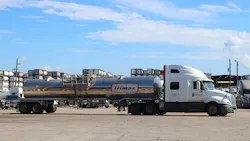
When it comes to expansion in modern bulk transportation, capabilities are more critical than equipment.
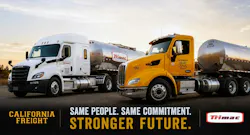
Trimac Transportation’s recent acquisition of California Freight expanded the Calgary-headquartered tank truck carrier’s food-grade network in the West Coast, adding eight terminals, a brokerage, and a 400,000-sq.-ft. warehouse to the operation. The transaction certainly bolstered Trimac’s regional assets, but a closer inspection highlights a fundamental shift in how bulk transporters are valued, says Spencer Tenney, president and CEO of M&A advisory firm Tenney Group.
Instead of acquiring tanks and tractors to bolster capacity, discerning buyers are targeting highly specialized operators with unique skillsets ahead of a coming surge in deal activity.
“People aren’t buying trucks for the sake of buying trucks,” Tenney, whose firm advised California Freight in the process, told Bulk Transporter. “That isn’t the primary driver. It’s the expertise, the scarcity, and whether you have specific capabilities in specific markets that cannot be replicated. That is what truly becomes valuable, especially as folks try to bring more to the table to create stickiness in their existing customer relationships.”
Targeting scarcity: Tank washes and containers
For major platforms looking to grow, acquiring hard-to-replicate services is the primary objective, Tenney asserts.
And no trucking sector is more specialized than bulk/tank.
“There’s a reason why this space has been more active than others,” he said. “The motivations aren’t just about the economics. There’s something strategically significant about what they’re doing. Buyers are looking to create synergistic capabilities, so that is what’s evolving.”
Heniff Transportation Systems is one of the bulk sector’s most acquisitive companies. Heniff CEO Bob Heniff recently told Bulk Transporter his private equity-backed group hasn’t been as active as he’d like, just because of lingering uncertainty in the market—one reason Heniff’s fleet is roughly the same size today as five years ago—but Heniff has stayed busy, expanding intermodal capabilities and ancillary services through deals like the Hagen Johnson pickup Tenney assisted that strengthened the group’s food-grade cleaning network.
“Tank washes are finite resources,” Tenney maintained. “And there’s also a barrier to entry that makes them valuable.”
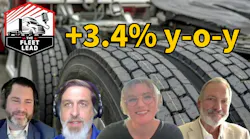 From left to right, Fleet Maintenance’s John Hitch, Bulk Transporter’s Jason McDaniel, FleetOwner’s Jade Brasher, and Trailer/Body Builders’ Kevin Jones gather for a panel discussion to break down the American Transportation Research Institute’s report on the rising costs of trucking in this episode of The Fleet Lead.
A similar dynamic is playing out in the ISO tank market, he says. And despite disruptions caused by erratic tariff policies in 2025, investor appetite for this highly specialized asset remains robust. “There’s still a huge demand for ISOs—even with tariffs,” Tenney confirmed.
“Investors really like that market.”
De-risking the transfer
While securing scarce capabilities is the goal, managing risk is the prerequisite.
In the wake of the Montgomery ruling—and the $600 million thermonuclear decision against C.H. Robinson—shippers are paying closer attention to safety metrics, making a carrier’s documented SOPs and safety results critical mechanisms for closing deals, Tenney suggests. With the Supreme Court ruling federal law doesn’t shield brokers from negligence, brands with proven trek records are better positioned to win business—and realize “blue-sky” value.
“If I was taking a bulk company to market, I’d make sure potential suitors know up front safety is a key characteristic,” Tenney said. “It’s just a function of de-risking the acquisition or potential transfer of ownership.”
Simultaneously, the rising cost of operating in a litigious environment is forcing strategic alignment between buyers and sellers. For owners feeling pressured by escalating risks, the juice may no longer be “worth the squeeze,” Tenney adds, pushing them toward an exit. And for acquired fleets, merging with a large, well-capitalized platform offers insulation against economic headwinds, while providing the resources to preserve service levels.
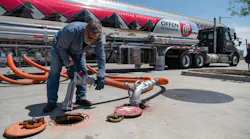

Trimac’s acquisition of California Freight aligns with this strategy of securing specialized dominance. “California Freight has built an exceptional reputation in the heart of California’s agricultural and dairy economy, and we’re excited to welcome them into the Trimac family of companies,” Matt Faure, Trimac president and CEO, stated in a news release. “With three decades of specialized expertise, their capabilities in food-grade transportation, warehousing, and brokerage align directly with Trimac’s long-term growth strategy.”
California Freight leaders echoed the sentiment, emphasizing the inherent value of accessing a larger platform. “Our mission has always been to serve our customers safely, efficiently, and effectively,” California Freight COO Jim Aartman said.
The freight tech ‘paradigm shift’
Beyond physical assets, the integration of artificial intelligence with legacy transportation management systems is sparking a “paradigm shift” in how investments are evaluated. Tenney notes this technological evolution is altering the M&A landscape as much as physical constraints.
But potential divestitures, such as the rumored sale of Trimble’s transportation assets, don’t necessarily signal business failure.
“Maybe the reason for a change in ownership is you’ve identified a more compelling investment opportunity, and you’re redeploying capital to support it,” he said. And for bulk carriers, the ability to keep pace with this AI-driven tech shift is fast becoming another critical factor required to create leverage and defend market share against aggressive competitors.
Private equity and the impending M&A spike
The California Freight deal is only one page in Trimac’s expansive growth playbook, representing its 20th transaction since 2019. A prior deal—the 2025 purchase of Houston-based Service Transport Company—was similarly designed to capture specialized expertise, specifically liquid bulk chemical hauling and tank-cleaning facilities along the Gulf Coast.
As the broader market stabilizes, Tenney foresees a wave of activity building toward a “significant” deal spike in 2027. “We have relatively low interest rates now, the freight market should be good the next two years, and we can count on law enforcement to continue addressing capacity, which helps with rates,” he said. “After that—all bets are off.
“That creates a two-year runway for a lot of interesting things to take place.”
This environment is drawing new players into the bulk space, Tenney adds. Traditionally, private-equity firms focused on asset-light logistics, but he’s seeing an increasing appetite for asset-based platforms—punctuated by Two Roads Partners’ recapitalization of fuel hauler Texas TransEastern.
With demographic shifts driving aging owners toward an exit—and a narrow window of stability before the cycle turns again—competition is intensifying. But in the bulk segment, an operation’s worth boils down to one reality: its ability to solve a buyer’s expensive problem right now.
“Stay educated, stay agile, know what’s happening around you, and make sure you can quickly pivot and capitalize when the time is right,” Tenney advised.
About the Author
 Jason McDaniel
Jason McDaniel
Jason McDaniel, based in the Houston TX area, has more than 20 years of experience as an award-winning journalist. He spent 15 writing and editing for daily newspapers, including the Houston Chronicle, and began covering the commercial vehicle industry in 2018. He was named editor of Bulk Transporter and Refrigerated Transporter magazines in July 2020.