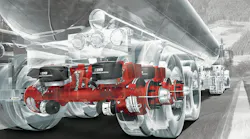
TTW panel: Designing equipment for optimal uptime
Key Highlights
- Application-specific trailer specifications, corrosion-resistant materials and 3D reviews can help extend equipment life.
- Preventative tire and valve maintenance—and washing trailers promptly after unloading—can reduce failures and corrosion.
- Telematics and automated tire systems can help fleets catch problems early and reduce emergency roadside calls.
- AI may improve predictive maintenance, but fleets and manufacturers will need to resolve questions around warranty claims.
- Technical-school partnerships and ongoing training can help fleets recruit and develop skilled maintenance workers.

OKLAHOMA CITY—When it comes to keeping bulk freight moving safely and profitably, the survival of the fittest starts long before a trailer hits the highway.
During the “Uptime by Design: Managing Maintenance, Controlling Costs & Preparing for Tomorrow” panel at Tank Truck Week 2026 in Oklahoma City, industry experts sat down to discuss the critical balance of equipment specification, technological integration, and preventative care. Moderated by Chris Becher, Kraft Tank territory manager, the group included Mark Perkins, STE director of sales; Kyle Neumann, Foodliner vice president of maintenance; Steve Thayer, LBT regional vice president; and David Owens, Highway Transport fleet service manager. Together, they outlined the nuances of modern tanker operations, making sure to emphasize the need for deep collaboration between carriers and manufacturers.
“It’s definitely a data-driven discussion,” Perkins said during a conversation on transparency. “If it becomes an opinion discussion, it isn’t constructive. It’s about uptime—and learning to share data.”
Strategic specifications for the long haul
Panelists agreed that maximizing a tank trailer’s 25- to 30-year life cycle begins with rigorous, application-specific spec’ing. Owens noted that upgrading barrel materials from traditional 316 stainless steel to 2205 lean duplex significantly reduced pitting and corrosion in his fleet. While the initial capital expenditure is higher, the investment pays off with extended asset longevity.
However, modern operational demands are putting new stress on equipment. Today’s products are increasingly potent, so fleets are simultaneously demanding lighter trailers to boost payload yields.

“Heniff [Transportation Systems] recently told me bleach used to come in that 17-18% range, and now they get loads that are in the mid-20s and up, but that isn’t reflected on the SDS sheet,” Perkins shared. “When you combine those two developments—where you have a more potent product and a lighter trailer—there are real challenges to that 20-year-plus life.”
To combat wear, Thayer highlighted the importance of evaluating a trailer’s operating region, noting that spec’ing aluminum end frames on suspensions or investing in stainless-steel components can prevent road salts and de-icing chemicals from wreaking havoc on undercarriages. The experts also warned against the complacency of simply rolling over last year’s order. Thayer advised scrutinizing specs annually—and eliminating unused options to shed weight and reduce complexity. Neumann championed a “3D spec review” as an invaluable tool for catching issues early on, saying fleets should also bring their experts into the process.
“A 3D spec review is an hour-long event, and it’s worth its weight in gold,” Neumann maintained. “Just have your senior foreman walk around the trailer with the manufacturer and say, ‘What do you like and what don’t you like?’
“Those are the guys who are working with tanks every day—and they’re not bashful.”
Tackling maintenance and combating downtime
Despite advancements in tanker design, wear remains the primary culprit behind unplanned downtime. Neumann pointed out tires are universally the highest maintenance expense across all of trucking. So, by aggressively monitoring casing lifespans, reducing premature scrap-outs, and pushing manufacturers for better performance, fleets can significantly extend tire longevity
“[Former Bridgestone engineering director] Guy Walenga stood up in front of all of us and said, ‘All of you are a lot smarter than the million-dollar machines at our retread plants,’” Neumann recalled, saying the memorable line pushed his transportation team to reconsider their tire cycles.

Foodliner currently achieves up to 11 years of life on low-profile 22.5 tires.
Valves also account for a staggering amount of service interruptions, particularly when failures occur at remote delivery points lacking roadside assistance. Owens and Neumann both stressed that avoiding valve issues boils down to the quality of preventative maintenance. “If we’re not pressurizing the trailer, we’re not doing a good PM,” Neumann warned.
A lack of immediate post-delivery cleaning is another major driver of equipment degradation. When trailers are parked in the yard with residual product clinging to the barrel, pitting is almost inevitable, panelists agreed. Owens said his fleet now adds strict language to SDS approvals mandating trailer washes immediately after unloading. “Everybody wants to bring that trailer home, park it in the yard, grab another load, and go,” Neumann said, adding that maintenance teams routinely investigate how long pitted tankers sat with residual product.
“Bring the trailers home and get them cleaned.”
Harnessing connected tech and AI
The influx of telematics and connected equipment data offers incredible potential for mitigating breakdowns, provided fleets can cut through the noise. Owens shared a recent success where an automated tire inflation system triggered a back-office alert, allowing the maintenance team to direct the driver to a shop before a minor tire issue escalated into a dangerous roadside event.
Similarly, Neumann reported massive gains from testing connected systems.
“We were able to cut our ERS calls in a six-month period by 52% by installing that equipment,” Neumann asserted.
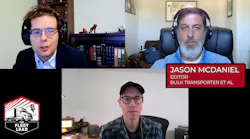 bulk_transporter_roundtable_screenshot
Looking ahead, artificial intelligence is poised to revolutionize predictive maintenance, panelists concurred. Foodliner plans to double its investment in AI tech over the next 12 months to forecast component failures before they occur. However, Perkins urged a philosophy of “trust but verify,” noting AI systems tend to build consensus rather than find objective truth. This predictive capability also threatens to create new friction between carriers and manufacturers over warranty claims for parts AI says will fail, but haven’t actually broken yet.
“AI is going to get to the point of saying, ‘Okay, this valve is going to fail in ‘X’ amount of months,’” Neumann said. “But the manufacturer is going to say, especially if it’s something that’s under warranty, ‘It didn’t fail you. So, if it didn’t fail, we’re not going to pay you to replace it.’
“It’s a double-edged sword, too, which will make for interesting conversations going forward.”
Building a next-gen workforce
No amount of advanced equipment or predictive technology can overcome a shortage of skilled labor. As veteran mechanics age out of the industry, fleets are forced to get creative with recruitment and training.
Many of them are partnering directly with technical schools to recruit young talent, preferring to hire inexperienced technicians who can be trained to standard rather than inheriting mechanics with bad habits. Foodliner took this further by operating its own technical schools in Indianapolis and Dubuque. And keeping techs engaged requires commitment to continuing education. Thayer urged OEMs to spend more time conducting cross-training at terminals, saying dedicated instruction on brake maintenance or tank construction yields immense returns.

“The process of fixing issues by elimination or going down a rabbit hole gets awfully expensive,” he said.
Ultimately, maintaining uptime in a rapidly evolving industry requires embracing innovations while staying grounded in proven practices. But above all, it demands a willingness to learn. “You need to be on the cutting edge, but maybe not the bleeding edge,” Neumann concluded. “We’ve made the mistake of being on that bleeding edge, and it’s costly.”
“But you must keep your eyes open to see what’s coming down the pipe.”
About the Author
 Jason McDaniel
Jason McDaniel, based in the Houston TX area, has more than 20 years of experience as an award-winning journalist. He spent 15 writing and editing for daily newspapers, including the Houston Chronicle, and began covering the commercial vehicle industry in 2018. He was named editor of Bulk Transporter and Refrigerated Transporter magazines in July 2020.