How connected vehicle intelligence cuts bulk hauler downtime
Key Highlights
- Bulk freight trucks experience more mechanical stress than standard trucks, increasing the risk of breakdowns that disrupt delivery schedules.
- Connected vehicle intelligence uses onboard sensors to monitor engine, brake, and electrical systems, providing early warnings before failures occur.
- Predictive maintenance can reduce downtime by 35-45%, saving costs and preventing missed delivery windows in tight scheduling environments.
- Monitoring critical components like brakes, tires, and batteries helps avoid roadside failures and keeps trucks operational during crucial loading times.
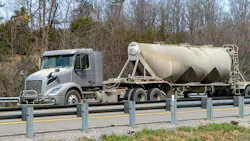
Ask bulk haulers what keeps them up at night, and their answer usually isn’t the rate per mile. It’s the truck that doesn’t show up—a grain trailer stuck on the shoulder during harvest, a tank wagon that dies halfway through its third load of the day, or an aggregate truck that won’t start before the morning shift. And, in bulk freight, a breakdown doesn’t just come with a repair bill. It shatters a delivery window somebody downstream was counting on.
Repair and maintenance costs alone reached $0.202 per mile in the American Transportation Research Institute's most recent operational cost benchmarking, and that figure only covers the shop bill. It doesn’t touch on what happens when a truck sits idle instead of running a load tied to a plant’s production window or a harvest cutoff. Industry estimates put the broader cost of unplanned downtime at $448 to $760 per day per truck once lost revenue, driver wages, and shipper penalties are factored in. For a bulk carrier working against a tight delivery slot, one bad breakdown day can knock the whole day’s routing plan off schedule, not just the truck that failed.
Bulk hauling breaks differently
General freight and bulk freight don’t wear the same way. A bulk trailer hauling grain, aggregate, or liquid product puts constant strain on suspension, brakes, and drivetrain components that a standard dry van rarely sees. Pneumatic tankers running blower systems for unloading add another mechanical layer altogether, one more thing that can fail on a job site with no shop for 50 miles.
Bulk contracts also tend to run on narrower windows than general freight. Miss an unloading slot at a concrete plant, and you haven’t just delayed a truck. You’ve stalled a pour, pushed back a crew, and given a customer a reason to call someone else next time.
Catching problems before the truck stops
Connected vehicle intelligence pulls data straight off a truck’s onboard systems, engine control unit, brake sensors, tire pressure monitors, and battery health, while the truck is still running. Instead of a warning light coming on somewhere off the interstate with no cell signal, the system flags a developing problem while there’s still time to schedule a fix instead of calling a tow.
A telematics device plugs into the diagnostic port and reads the truck continuously. That data gets checked against what’s normal for that specific vehicle: its engine hours, load history, and how it’s been running lately. When something starts to drift, an alert goes out well before the part gives up.
That’s the real shift. Fixing a part after it breaks is expensive and unpredictable. Fixing it because the data says it’s about to break is neither. Fleets that make that switch see downtime reductions in the range of 35-45%, based on recent telematics research tracking predictive maintenance adoption across commercial fleets.


Where the data really comes in handy
A bulk truck’s engine and drivetrain take a beating from constant heavy loading, and sometimes rough terrain on the way to a job site. Watching coolant temperature, oil pressure, and turbocharger performance catches thermal stress and mechanical fatigue while there’s still a maintenance slot open, instead of a tow truck bill.
Brakes matter more on a loaded tank trailer than almost anywhere else in trucking. Sensor data on brake wear and tire pressure, tracked through condition-based diagnostics like the kind covered in this predictive maintenance overview, lets a shop replace parts on a planned cycle instead of finding the problem during a roadside DOT inspection, which is the worst possible time to find it.
Battery and electrical failures cause a huge share of no-start mornings, and for a bulk hauler running an early pickup tied to a plant’s schedule, a truck that won’t start is as bad as one that breaks down mid-route. Catching a failing alternator days ahead of a dead battery keeps the truck in the yard on a technician’s schedule rather than stuck at a loading dock.
Some platforms now factor route terrain and load weight into the picture too, so dispatch can see which trucks are approaching a service threshold and route around them before a problem shows up mid-haul.
Data only helps if it’s utilized
None of this matters if the alerts sit in a dashboard nobody opens. The carriers cutting downtime built a habit around it: someone checks flagged vehicles every morning, dispatch reroutes around a truck that's close to due, and drivers report symptoms early instead of waiting for something to get worse.
Platforms like Intangles, an AI-powered fleet intelligence system, pull engine, brake, and load data into one view rather than treating each system separately, which matters for bulk trucks since they rarely fail for only one reason. Anyone comparing connected maintenance systems can find more details in this breakdown of real-time IoT fleet tracking on how the visibility side of this works day to day.
The sensors themselves aren’t the hard part. Most trucks already generate this data through their existing ECUs. The hard part is having something read it correctly and tell a maintenance team which one their 100 trucks needs attention this week, and which 99 can wait.
What carriers should take away
Downtime won’t disappear completely. Weather, accidents, and genuine surprises are part of running trucks, bulk or otherwise. But the kind of downtime that comes from a slowly failing part nobody caught in time is largely avoidable now, and bulk haulers have more reasons than most fleets to close that gap given how tightly their schedules run.
Carriers that build this kind of monitoring into daily operations aren’t just saving on repair bills. They’re protecting the delivery windows their contracts depend on. In bulk hauling, that reliability is often the real difference between landing one job and keeping a customer for years.
About the Author
 Siddharth Singh
Siddharth Singh
Siddharth Singh is the chief revenue officer for Intangles North America. He helps commercial fleets leverage AI-powered predictive vehicle health and fleet intelligence. With over 20 years of enterprise sales experience across four continents, he specializes in GTM strategy, fleet technology, and scaling complex B2B solutions.