Right Price: UPT vice chair a ‘perfect fit’ amid imperfect times
David Price didn’t expect to be here. Growing up, he was more interested in playing baseball and pursuing a career in athletics than participating in the family’s fuel-hauling business, so he never envisioned one day leading United Petroleum Transports—much less becoming the face of the tank truck industry as National Tank Truck Carriers’ 78th chairman of the board.
But this is right where Price is supposed to be.
“Every chairman is different,” said Ryan Streblow, NTTC president and CEO. “So, it is tough to characterize David, but I would say that he has the best interests of the tank truck industry in focus every day. He’s quieter, but very thoughtful, so when he talks, he has valuable insights to share. And he’s done a spectacular job as chairman, coming in during a difficult time, and helping lead our organization while we’re having to make some tough operational decisions.
“He’s been the perfect fit at the perfect time.”
David’s chairmanship is playing out amid historic times, too, and not because of the government shutdown or freight recession, which both set dubious records last year, or the tariff volatility that made planning impossible. On the contrary, this is a period worth celebrating for the Prices. David started his term as chair—a position previously held by his father, Greg Price—at NTTC’s 80th-anniversary gathering in Tampa, where he succeeded Atlantic Bulk Carrier Vice President Ward Best; and he’s ending it in UPT’s 60th year of operation. “This isn’t a box I’m checking because I had to,” David said. “I didn’t do it because my dad is a prior chair. I wanted to get involved. Then you build relationships, move through the seats, and get exposed to different things, and suddenly you’re at the end of a six-year commitment to the association, wondering, ‘How did this happen?’ But I was raised to recognize my responsibility to give back to the industry that has supported our family for so long.
“So, I see this as a service, not, ‘Oh, look at me.’”
Fuel-hauling legacy
Keith Price, David’s grandfather, founded the carrier in 1966; Greg, who entered in 1978, now serves as executive chairman; and David, who changed course in 2011—after working in the University of Oklahoma athletic department—rose to executive vice chairman in 2022. After acquiring Florida Rock and Tank Lines in 2023—in the largest transaction in the company’s history—the combined UPT-Florida Rock operation now boasts more than 900 tractors, 1,000 drivers, 1,500 team members, and 30 locations across the South stretching from Las Vegas to Port Everglades, Florida—and ranks as one of the largest for-hire fuel haulers in North America. “It all comes back to the people who got us here,” David reflected.
“It certainly wasn’t just me. I haven’t really been around that long. But it wasn’t just my dad, and it wasn’t just his dad either. It took the combined efforts of many family members, along with hundreds of other employees, and thousands of professional drivers, to get us to this point.”
The company focused on fuel from the beginning. As the story goes, Keith was fresh off serving in World War II when his mom told him to get a job or she’d find one for him—which she did, at a local service station. The rest is, well, history. Greg joined Keith after graduating from Oklahoma and formed UPT in 1980. They ran UPT and OTL together until Keith’s death in 1993; and the family finally unified operations under the UPT brand in 2012. Kevin Price, Greg’s younger brother, also spent many years with the company, but David was the only third-generation family member for eight years—until his older brother returned in February.
“Matt spent 10 years in the business before moving to Colorado in 2018 to open a restaurant, but he’s back, and it’s great to have him,” David said. “He’s going to be our vice president of culture and brand strategy, and help us tell our story through our website, newsletters, and branding—and our 60th-anniversary celebrations. As we continue to grow, we want to maintain a family culture, and that message carries a lot of weight when it comes from a family member.”
Connecting to the future
Unlike his brother, Matt did immerse himself in the business as kid. “He was the one running the hallways and working odd jobs in the summer,” David recalled. “You might have seen me at a Christmas party. But that’s because I was always playing sports and going to camps.” When David decided he’d rather help grow UPT than someone else’s sports team, he started as a dispatcher at UPT’s Houston office—and ended up staying after meeting wife Jessica, the president of Palletized Trucking, through the Texas Trucking Association’s Emerging Leaders Council.
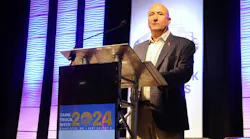
Price spent five years as chief operating before assuming his current role in 2022, when UPT hired Matt Herndon as president, making him the first non-family member in leadership. As executive vice chairman, David now focuses on building relationships with employees, customers, and vendors, and serving as the company’s voice at the association level. And he took the same approach into his tenure as NTTC chair, aiming to strengthen connections with NTTC staff and members—while helping ensure the association moves forward.
 img_6388
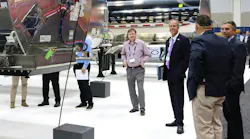 NTTC chairman Herb Evans visits the exhibit hall during Tank Truck Week 2023.
Before handing the reins to incoming chair Jeremy Mairs, president and CEO of Cox Petroleum, David took time to talk to Bulk Transporter for our annual “State of the Industry” address, covering everything from Trump 2.0, electric tank trucks, and technology adoption to stepping outside his comfort zone. Questions and answers are edited for space and clarity.
Bulk Transporter: What has this year been like for you?
David: “It’s been a lot of fun. It’s great to have more frequent interactions with the staff. I always knew the NTTC staff is good, but this past year solidified how well run our association is. Everyone knows their role. I met with each one of them right after the Annual Conference, just to get to know them, and everybody was very clear about what they do and why they do it. And it was very comforting to know they didn’t need me every day, and Ryan and Moira [Smith, NTTC VP of finance and administration] are great partners to spearhead this organization.
“So, it’s been rewarding, and certainly an honor to represent this industry and our family of companies.”
BT: What did you learn from your father that is helping you as an industry leader?
David: “I learned to question everything, or at least analyze and inspect every detail. That doesn’t mean always distrusting people or the information given to you. It just means, don’t be afraid to think outside the box, or question why. Why do we do this? What’s this for? What’s the purpose? Those questions force people to think outside the box. And if I ever hear, ‘This is what we’ve always done,’ then we need to reevaluate, because every decision needs a purpose.”
BT: Have you had to step outside your comfort zone as NTTC chairman?
David: “Am I more reserved than Ward? Yeah, that’s obvious. I don’t have a voice that travels like his, or my dad’s. I always joke that my voice travels 4 or 5 feet in front of me, then dissipates, whereas my dad can whisper in the back of the room, and the person on stage can hear him fine—and so can everyone else. I didn’t get that, but that’s OK. I’ve had people asking if I’m enjoying myself, or if I’m uncomfortable, all my life, and I’m like, ‘No, I’m good.’ Do I love having the bright lights shining on my bald head? Not necessarily. I remember the first time I took the stage, I was shaking like a leaf, honestly. But I’m also a firm believer in continuing education and personal growth, so I’ve really enjoyed the challenge. And now I can lean on these experiences the next time I have an opportunity to speak in public.”

BT: You didn’t join the family business until you were 26. Fifteen years later, can you see yourself doing anything else?
David: “Both our grandfathers [David’s and Jessica’s] were older than us when they started their businesses, which are still thriving decades later. So, in theory, could I go in a different direction? Yeah, I could. But do I see myself doing that? No. I have a lot of fun most days. Every day isn’t fun. Let’s not kid ourselves. But as long as the good days, and the people I get to work with, outweigh the struggles, and the risks we take every day, I’m here to stay.”
BT: How did bringing in Herndon alter the company’s trajectory?
David: “Matt certainly brought us a different viewpoint on where we could take this business. My dad would probably say he gave us the energy we needed to achieve what we set out to achieve, and we’ve done that in the last three and half years since he joined. So, he’s helped us make the organizational changes that were needed. His presence has really revitalized us, and helped us get to the next level, grow the platform, and create more opportunities for people to join our business.”
BT: How do you see the current state of the tank truck industry?
David: “Big picture, the industry is still waiting for a turn. It’s like a big ship that’s slowly turning around. It’s not a hockey stick. It’s a big ‘U’ where we’re seeing signs of coming out of a multi-year trough, but people don’t know whether to believe it or not. Most of them probably don’t because everyone thought 2025 was going to be the year, and then tariffs hit, or the talk of tariffs, and the different changes that caused indecision; and that volatility still exists in our market. And so, until we see consistency in the turnaround, it’ll be hard for people to believe it’s real—but I believe it’s coming. It has to. It always does. And the companies that are best positioned and prepared are the ones that will succeed when it finally happens.”
BT: Is the tank truck space still a good segment to be in?
David: “In terms of trucking, yes. We’re a little more insulated from economic pressures. But none of us are immune to rising insurance, service-provider, and labor costs. Everything keeps going up in an already-tight market, which is why we saw a number of closures last year, despite a quieter M&A market. So, we’ll see how 2026 shakes out, but I believe M&A activity will increase.”
BT: What are the greatest challenges for the industry right now?
David: “Insurance costs are up there. That’s hurting a lot of people. We’re in a risky business, but the increases have been substantial over the last few years, and I don’t see it slowing down. And there’s still a shortage of quality drivers. It’s not the hot topic now, but it’s still under the covers, and when freight turns around, we’ll be talking about it again. We’ve made strides with labor, and the next generation, but we still have a long way to go, so that’s another concern of mine.”
BT: Chemical haulers were hit hard in 2025. How did fuel haulers fare?
David: “If the interest rates drop, people will buy more goods, and that will help all of us. They’ll invest more in building, whether it’s residential or industrial, and that drives everything else. And for us, the price of crude controls everything. It was stuck around $60 for months, almost like trading stopped. But it’s been creeping up a little bit, and I think there’s a sweet spot for everybody involved, because the price of crude not only impacts drilling, but everything else a barrel of crude can help produce. I believe we’d be in a good spot between $70 and $80, or somewhere around there. If it goes above $80, things start to get too pricey.”

BT: How would you grade the first year of Trump 2.0?
David: “That’s a loaded question. From an association standpoint, we have great relationships with people at different regulatory agencies, even at the EPA, which nobody would have thought possible two years ago. But relationships don’t sign our checks. So, with everything else going on in and outside the country, it’s tough to give a fair grade. Looking at it with my industry glasses on, I’d be nice to say a ‘B.’ It wasn’t a total flop, but it wasn’t a home run either. So, I’d give a passing grade and say let’s move on to the next year.”
BT: Is forced electric-vehicle adoption still a concern for the industry?
David: “For us, EVs make no sense at all. And not using them makes all the sense in the world. And not just from a power-source perspective—it’s a safety issue. There are so many other applications where electric trucks make sense, so we don’t need to use a broad brush. They have a place at the table, but a lot of other alternative fuel sources do, too. It’s just, how big is the chair? I think that’ll all work itself out, but we need a plan beyond forcing everyone to use EVs, especially people pulling aluminum tanks filled with flammable liquids.”
BT: Given the state of the market, and evolving economics, has technology adoption reached a tipping point?
David: “It makes sense. The tank sector is forward-leaning toward various safety technologies, aside from driverless trucks, but it tends to be a little behind the curve when it comes to adopting non-safety-focused technologies in the trucking space. And there are differing opinions on why that’s the case. But as adoption occurs, and the ball starts rolling, it has a snowball effect. That can still be a bad effect if you don’t manage it well. You can have too much technology and data overload, and then you have all this information you’re paying for but not utilizing. But in 2026 and beyond, leveraging technology is the only way anybody will survive. The best companies out there today, in any segment, really are just tech companies. And if you do it right, it can make you operate more efficiently—but it should be the lower-cost solution in the long run.”
About the Author
 Jason McDaniel
Jason McDaniel
Jason McDaniel, based in the Houston TX area, has more than 20 years of experience as an award-winning journalist. He spent 15 writing and editing for daily newspapers, including the Houston Chronicle, and began covering the commercial vehicle industry in 2018. He was named editor of Bulk Transporter and Refrigerated Transporter magazines in July 2020.