NeuroUX launches ‘objective’ fatigue monitoring platform
Key Highlights
- NeuroUX employs the scientifically validated Psychomotor Vigilance Test to objectively measure driver alertness.
- Provides real-time notifications via SMS, email, Slack, or dashboards when fatigue levels are concerning.
- Runs on existing mobile devices, eliminating the need for costly hardware like cameras or wearables.
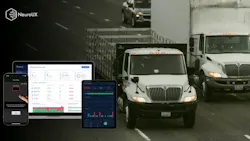
NeuroUX, a San Diego-based developer of scientifically validated cognitive assessment tools, recently launched its Fatigue Monitoring Platform to provide safety-critical teams with an objective, data-driven fit-for-duty signal. While the technology already has gained attention in the aviation and mining sectors, it also offers a new layer of protection for the tank truck and hazardous materials industry, where driver alertness is paramount to public safety.
The platform is designed to move fatigue management away from subjective self-reporting and supervisor observation, which can be unreliable, NeuroUX reported. Instead, it provides a fast, non-invasive method for carriers to ensure drivers are mentally ready for the road before they ever begin a shift.
“Fatigue is the one impairment we still manage by guesswork,” Anunay Raj, NeuroUX co-founder, told Bulk Transporter. “A brief check on a phone gives a tank truck carrier an objective, baseline-referenced read on whether a driver is fit for duty before they ever get behind the wheel—with no wearables and no cameras.”
Data-driven alertness checks
The platform utilizes the Psychomotor Vigilance Test (PVT), a “gold-standard” alertness assessment backed by decades of peer-reviewed sleep research. Rather than using a generic pass/fail threshold, the system benchmarks each worker against their own personalized performance history, which improves accuracy and fairness, Raj maintained.

Key features for bulk transport fleet managers include:
- Real-time notifications: Supervisors receive instant alerts via SMS, email, Slack, or a dashboard when a driver’s results fall below their personal baseline.
- No hardware required: The platform runs on existing mobile phones or tablets, eliminating the need for expensive cameras or wearable devices.
- Trend analytics: Management can gain visibility into fatigue patterns across specific teams, shifts, and routes, helping identify recurring risks that might otherwise go unnoticed.
- Operational flexibility: Checks can be integrated into existing safety workflows, whether performed pre-shift, during breaks, or whenever a readiness concern arises.
Addressing the $136B fatigue problem
The launch comes as the transportation industry continues to grapple with the high cost of exhaustion.
Safety research links fatigue to an estimated 13% of workplace injuries and roughly $136 billion in annual lost productivity for U.S. employers. Within the trucking sector specifically, the stakes are even higher. NHTSA recorded 644 drowsy-driving deaths in 2024, and a AAA Foundation study estimated that 17.6% of fatal crashes between 2017 and 2021 involved drowsy drivers.
By providing an objective signal, NeuroUX aims to help fleets intervene earlier and act more consistently. Raj notes that the platform is not about blaming drivers, but rather supporting better conversations around scheduling, workload, and recovery time. The technology has already seen use at leading institutions such as Harvard and the University of California San Diego, and it is built to meet HIPAA and GDPR data privacy standards.
“Our goal is to minimize fatigue-related incidents by giving companies a data-driven way to assess whether workers are alert, ready and able to perform safety-sensitive tasks,” Raj explained in a news release. “Fatigue affects even the most experienced workers. When companies can measure it, they can manage it.”
About the Author
 Jason McDaniel
Jason McDaniel
Jason McDaniel, based in the Houston TX area, has more than 20 years of experience as an award-winning journalist. He spent 15 writing and editing for daily newspapers, including the Houston Chronicle, and began covering the commercial vehicle industry in 2018. He was named editor of Bulk Transporter and Refrigerated Transporter magazines in July 2020.