AGC: Soaring costs inflate construction materials prices
The producer price index for materials and services used in nonresidential construction rose 0.1% from January and 3.1% from February 2025, driven by sharp increases in metals prices, according to a recent analysis of new government data by the Associated General Contractors of America.
Association officials warned that rising costs for key materials are making it harder for contractors and project owners to move forward with planned construction projects.
“Major increases in the prices for diesel fuel and key metals occurred before the start of the Iran war,” Ken Simonson, the association’s chief economist, said in a news release. “The disruption of oil, natural gas, and aluminum supplies from the Middle East is pushing up construction costs further and causing owners to delay projects.”
The producer price indexes for aluminum mill shapes and steel mill products jumped by 39.1% and 20.9%, respectively, from February 2025 to February 2026, the largest year-over-year increases since the supply-chain disruptions of early 2022, AGC reported. Other metal products used in construction also posted sizable gains. Fabricated structural metal bar joists and rebar rose 20.0% year-over-year, while copper and brass mill shapes increased 15.1% compared to February 2025.
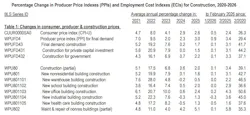
Energy-related inputs also shifted significantly. Diesel fuel prices jumped 20.3% from January, highlighting how quickly fuel costs can move, although prices were 3.1% higher than a year earlier. Rising fuel costs can quickly ripple through construction supply chains, as the cost of truck transportation of freight increased 3.1% over the past year. Rising volatility in fuel markets could push transportation and operating costs higher in coming months if disruptions to Middle East energy supplies persist.
Association officials noted that rising costs for metals and fuel highlight how sensitive construction supply chains remain to global disruptions and trade policy. They urged federal officials to pursue policies that reduce volatility in materials markets and provide greater certainty about the future cost of key construction inputs.
“There is a limit to how many price increases the market can absorb before owners put projects on hold,” AGC CEO Jeffrey D. Shoaf said. “Reducing uncertainty around tariffs and stabilizing supply chains would go a long way toward helping contractors keep projects moving forward.”