AGC: Construction input costs rise in September

The producer price index for materials and services used in nonresidential construction rose 0.2% in September and 3.2% from September 2024, according to a recent analysis of government data by the Associated General Contractors of America.
Association officials said the latest figures underscore how cost pressures are resurfacing for contractors even as overall demand in several private-sector construction segments remains muted.
“Persistent input-price pressure, even when the increases are modest, creates a stop-and-go rhythm in procurement and production instead of a steady flow contractors and suppliers need,” Macrina Wilkins, the association’s senior research analyst, said in a news release. She also noted that “these month-to-month swings make it harder for firms to plan confidently and protect already-thin margins.”
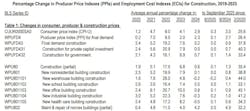
Several major input categories saw notable year-over-year increases. The producer price index for aluminum mill shapes increased 1.7% last month and 26% from September 2024. While the index for steel mill products fell 1.5% in September, it climbed by 12.4% over the past 12 months. The index for precast concrete products inched up 0.3% for the month and 5.5% year-over-year. Diesel fuel, a critical input for off-road equipment and transportation, rose 1.8% for the month and 8.2% year over year.
Association officials said September data shows that contractors are facing modest but persistent increases in input costs even as bid prices have begun to cool. They noted that this imbalance, where material costs edge higher while final demand and pricing power soften, is adding pressure for firms at a time when several private-sector markets remain uneven. Uncertainty around future tariff levels and global trade conditions is adding another layer of caution, making it harder for contractors to plan procurement or secure long-term pricing with confidence.
“Contractors can manage modest cost increases, but they need a predictable environment to keep projects moving,” AGC CEO Jeffrey D. Shoaf said. “Greater clarity on tariff policy and progress on outstanding trade issues would help stabilize materials markets and give firms more confidence to plan for the work ahead.”