Hazardous hurdles: The hunt for tanker drivers heats up
Key Highlights
- Roadmaster estimates fewer than 10,000 active drivers meet its endorsement, experience, and safety requirements.
- The company plans to hire 90 drivers in 2027, with demand rising alongside microchip manufacturing and hazardous-waste shipments.
- A two-week orientation tests hazmat knowledge, equipment skills, physical readiness, and respirator fit.
- Roadmaster says guaranteed daily pay helps reduce incentives to speed or take safety shortcuts and has helped bring turnover to 45%.
- Fisk recommends shippers ask about driver qualifications, turnover, training, subcontracting, and compensation before tendering sensitive freight.
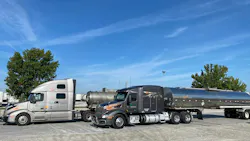
With the Trump administration’s regulatory crackdown draining the pool of active CDL holders, fleets hauling the nation’s most hazardous freight face a growing challenge finding the right drivers.
The Federal Motor Carrier Safety Administration’s enforcement of English proficiency standards and non-domiciled CDL rules has sidelined more than 220,000 drivers in 2026, according to agency estimates, creating a capacity crunch across the industry. For specialized carriers moving chemical waste, explosives, and Department of Defense cargo, finding operators with both tanker and hazmat endorsements—and the clean safety records required to haul them—has become an intense competition for a vanishingly small talent pool.
“Most of the industry is learning this year what a constrained driver market feels like,” Michael Fisk, vice president of Roadmaster Group, told Bulk Transporter. “For hazmat and defense freight, that market has always been small. When a shipper hands us explosives or a government load, the real question is whether a qualified, cleared driver is available to take it.”
Fisk oversees driver recruitment and retention for Roadmaster, a holding company operating roughly 600 trucks. While acting as the DOD’s largest private hauler of hazardous freight, Roadmaster also runs two tank truck divisions: SJ Transportation, a 100% tanker fleet with 70 power units, and Tri-State Motor Transit, which runs 400 tractors and 60 tank trailers. And because many of Roadmaster’s customers also ship bulk liquids, every driver must hold a tanker endorsement—yet only a small percentage possess the expertise required for pumping and offloading.
The unicorn hunt
While roughly 2.5 million CDL holders exist in the U.S., third-party recruitment data indicates that only about 70,000 hold both hazmat and tanker endorsements. Factoring in Roadmaster’s requirement for at least 12 months of over-the-road experience and a pristine safety record, Fisk estimates the active pool drops to fewer than 10,000 qualified drivers. “Those unicorns—especially if they’re good drivers—are simply not that available,” Fisk noted, adding that high numbers of oilfield drivers often skew data because they carry endorsements but generally lack the over-the-road experience with liquid surge fleets demand.

Roadmaster is looking to hire 90 drivers in 2027 to keep up with organic market growth, driven heavily by a booming microchip manufacturing sector requiring specialized fleets to transport liquid hazardous waste, Fisk shared. So, faced with a shrinking pool of qualified haulers, Roadmaster shifted its recruiting strategy. Instead of holding out for perfect candidates, the company now targets ambitious flatbed drivers accustomed to demanding labor.
“The physicality of flatbed is good,” Fisk explained. “And then we’ve got to know they can handle the surge involved with driving a tanker. Those are adjustments we’ve made, and we train them to the specs and qualifications we need because we’re just not finding it in the marketplace.”
Raising the bar on safety
To bridge this experience gap, Roadmaster bypasses the industry-standard four-to-eight-hour orientation for a grueling two-week program testing physical preparedness and safety compliance.
The first week demands 60 hours of intense hazmat training with nightly homework, Fisk said. During the second week, drivers must demonstrate equipment operation while wearing heavy rubber PPE suits in the Arizona heat, and they must pass a strict pulmonary mask fit test. “We lose a lot of drivers in orientation because they’re not willing to shave or otherwise qualify for the mask fit,” Fisk revealed. “I’m shocked by the amount of experienced tanker drivers who show up with beards they’ve had for years and say, ‘I’ve never done this before.’
“The physicality we require seems to be much higher.”

To retain these highly trained drivers and eliminate the temptation to take dangerous shortcuts, Roadmaster pays a guaranteed daily rate. This compensation model helped the fleet slash turnover to 45%.
“You can’t preach safety and have a conflicting interest,” Fisk said. “If the driver only gets paid cents per mile, then that is their sole motivation—to get as many miles as possible. We are largely a guaranteed day-pay company so we remove the incentive to speed or take shortcuts.
“You’re going to get paid no matter what, so do the job right.”
Shipper liability and regulatory realities
With recent legal rulings placing heavy scrutiny on the liabilities chemical shippers and 3PLs assume when chasing the lowest freight rates, Fisk emphasized that a carrier’s retention numbers are the ultimate indicator of highway risk. He noted the real-world consequences of compromising on price, recalling a competitor that recently suffered a tragic fatality in Phoenix on a specialized load Roadmaster declined due to safety concerns.
“This is what’s going to have to change,” Fisk insisted.
“We told them, this is our rate for that work, and they declined. Unfortunately, another carrier took it at a rate that they felt they could compromise on—and they both ended up with very real problems.”
Five questions to ask before a sensitive load moves
American Trucking Associations has noted some carriers reject up to 90% of driver applicants for failing basic prerequisites. With capacity tight, Roadmaster’s Michael Fisk recommends shippers of hazmat, explosives, and government freight spend as much time vetting the driver as they do checking a carrier’s authority and insurance. He advises shippers to ask these five questions:
- How many of your drivers hold both hazmat and tanker endorsements, and how many have hauled freight like mine?
- What was your driver turnover rate last year?
- How long is your orientation, and what does it cover on hazmat handling and security?
- Will your own driver haul my load, or could it be brokered to another carrier?
- How are your drivers paid, and does that pay structure reward speed?
Beyond rate-chasing liabilities, Fisk expressed frustration with FMCSA’s Compliance, Safety, Accountability (CSA) scoring system, arguing it unfairly penalizes high-volume hazmat haulers. Roadmaster recorded a small number of violations across 33,000 hazmat loads during a recent 12-month period, but it’s lumped into the same group as higher-frequency offenders. “We’re judged against other companies that do 33,000 total loads, but only 500 might be hazmat,” Fisk said.
“The comparison is nowhere near apples to apples on a CSA basis.”
Despite these frustrations, Fisk said he supports FMCSA’s recent efforts to remove non-compliant drivers and chameleon carriers from the road. For Roadmaster, this regulatory cleanup is personal: Three years ago, one of the company’s recruiters was rear-ended and killed on the freeway by a non-English-speaking immigrant driver who was operating a commercial truck.
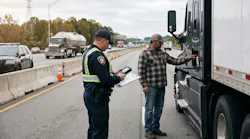

Removing bad actors tightens capacity, but it also drives up freight rates—and it’s a welcome shift for safe fleets. “The rate recovery, and the economic recovery in trucking, is 100% due to [Transportation] Secretary [Sean] Duffy’s response to removing the bad actors,” Fisk said.
“Companies that pay attention to policies and regulations love what’s going on.”
About the Author
 Jason McDaniel
Jason McDaniel, based in the Houston TX area, has more than 20 years of experience as an award-winning journalist. He spent 15 writing and editing for daily newspapers, including the Houston Chronicle, and began covering the commercial vehicle industry in 2018. He was named editor of Bulk Transporter and Refrigerated Transporter magazines in July 2020.