Lessons in resilient growth for bulk haulers
Key Highlights
- Fleets that track weekly cash flow and understand cost per mile are better positioned to protect margins during market downturns.
- Growth should be incremental and flexible, with fleets avoiding overextension and using short-term financing to maintain adaptability.
- Internal signals like delayed payments and increased short-term credit use serve as early warning signs of financial stress.
- Technology investments should focus on improving operational efficiency, such as trailer turns and reducing idle time, rather than chasing new tools without clear results.
- Preparation, discipline, and understanding fundamental metrics like cost per mile and break-even points are essential for seizing opportunities and avoiding risks.
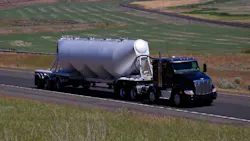
The transportation industry moves in cycles, but the way fleets experience them differs. Having worked for over 30 years with for-hire trailer operators across bulk, tanker, dry van, and specialty equipment, a pattern has become clear. Fleets that hold up are not always the ones growing the fastest. They are the ones that understand their business, move deliberately during growth periods, and preserve flexibility when the market eventually shifts.
Cash tells the truth
Across equipment types, the strongest fleets focus on cash flow first, not just profit margins. Profit does not solve timing issues. What matters is knowing where cash is coming from, when it arrives, and how quickly it leaves.
The fleets that stay steady track cash weekly, not just monthly. They stay on top of receivables, watch when customers pay their bills, and understand cost per mile. That is what allows them to price freight correctly and protect margins when the market tightens.
Market indicators, such as rejection rate, an anonymized measurement of carriers’ willingness to accept loads, can help put that in context. The indicators give a sense of both capacity and demand and help separate what is happening in the market from what is happening inside the business.
Growth can help or hurt
When freight demand jumps, it looks like a clear opportunity, but growth can go both ways.
Overspending usually happens when asset prices and lease rates are high. Fleets invest based on current utilization and rates, expecting them to hold. When the market cools, equipment values drop faster than debt, leaving fleets with underused equipment and less flexibility.
On the other hand, underinvesting can quietly hurt long-term value. Having enough capacity is key. If you cannot meet commitments, customers move on, and those lanes are hard to win back.
The fleets that handle this well do not go all in or hold back completely. They grow step by step, lock in freight before making big investments, and use financing that gives them room to adjust.
The warning signs are internal
When demand is strong, problems rarely show up in the market first. They show up inside the business.
Delayed payments, growing use of short-term credit, or revenue increasing faster than cash flow are early warning signs of stress. Even customers asking for longer payment terms during busy periods can point to future pressure.
More trailers and more revenue can look like progress, but if that progress leaves less cash available, it weakens the business over time. The fleets that manage through cycles well are the ones that spot those signals early and act on them.
Managing expansion when the cycle is unclear
When markets are unpredictable, growth needs to be approached differently. It should not just be about adding more assets to make more money.
Information about spot rates can inform decisions, especially regarding contract timing, asset deployment, and investment.
The risk is expanding without a plan to slow down, if needed. Growth that cannot be adjusted creates more pressure than it solves when conditions change.
The fleets that handle this best think through multiple paths. They ask whether assets can be sold, parked, or repurposed if demand or freight rates drop, and they avoid making big decisions based only on a strong market.
They also pace their growth, don’t overextend, and use equipment financing strategically. When purchasing additional equipment, they use shorter-term financing, which builds equity faster than long-term financing. The equity can later be used to refinance or obtain working capital to fund operations.
In volatile cycles, being able to pull back often matters more than trying to grow too fast.
Technology needs discipline
Technology can improve financial performance, but only when it is tied to real results. The trap is chasing new tools instead of focusing on what they change.
The investments that pay off are the ones that improve how the business runs. Faster trailer turns, less idle time, and quicker cash all increase efficiency, meaning fleets can do more with fewer assets.
The real value comes from understanding performance in detail. Looking at profit by trailer, customer, lane, or location can show where trailers sit too long, where empty miles add up, and where costs are higher than expected. It also helps identify freight that looks profitable but is not.
At the same time, visibility does not equal control. Without clear expectations, technology just highlights problems instead of fixing them.
Fundamentals still matter
Even as fleets modernize, the basics do not change. Cash management, billing discipline, and knowing your numbers still drive long-term performance.
A lot of businesses focus on dashboards and forecasts, but most problems come down to cash. Fleets run into trouble when cash is not there, not because they lack data.
Technology should support the fundamentals, not replace them.
Being ready changes the outcome
Deals show up fast in this business. They are competitive and not always visible in advance. Fleets that are prepared can move quickly. Those that aren’t ready tend to hesitate or miss out.
Preparation comes down to discipline and clarity. The strongest fleets separate operating cash from growth capital, tighten reporting, and know their numbers. Cost per mile, break-even points, and profitability all factor in better decisions. They also make sure financing lines up with how assets are used and build enough flexibility to handle a downturn.
When those pieces are in place, opportunities become decisions, not risks.
Not all freight is worth it
When markets tighten, one of the biggest mistakes is chasing volume just to stay busy.
Taking on lower-quality or lower-priced freight might keep equipment moving, but it usually hurts margins and increases asset wear. It may feel like a temporary solution, but it often creates longer-term problems. The fleets that hold up focus on protecting profitability, even if utilization dips. Tighter markets tend to expose issues that were hidden during stronger periods.
Where equipment financing really matters
When it comes to equipment purchases, financing can be used as a tool to guide the business.
It helps shape decisions around timing, risk, and growth. It keeps options open, influences when moves should be made, and builds resilience ahead of change. Fleets that approach it this way are not just reacting to the market; they are prepared for it.
Bringing it all together
Over time, the difference between fleets becomes clear. Some chase what the market is doing. Others stay grounded in how they run the business.
The ones that hold up stay focused on cash, grow with a plan, and adjust when things start to shift. They use technology to improve performance, not replace discipline, and they prepare before they need to act.
Markets will keep changing. The businesses that endure are built with that in mind long before the cycle turns.
About the Author
 Chad Coe
Chad Coe
Chad Coe is senior vice president of the Southeast region for construction and transportation at Commercial Credit Group. He began his career in 1991 at Worldwide Equipment, gaining experience across finance and insurance, collections, and sales. He later held leadership roles with Peterbilt of Bristol and Financial Federal before joining the company in 2016. Chad was promoted to SVP in 2025, overseeing construction and transportation operations across the Southeast. He holds bachelor’s degrees in business management and accounting from Emory & Henry College.