Fueling the future: How to prep a tank truck company for sale
Key Highlights
- Tank truck businesses require specialized safety, compliance, and operational standards that significantly influence their valuation and sale process.
- Owners should focus on strengthening safety records, fleet maintenance, leadership teams, and documentation to attract quality buyers and facilitate a smooth sale.
- Understanding the different buyer types—financial, strategic, and entrepreneurial—helps owners align their sale strategy with their legacy and desired post-sale involvement.
- A structured pre-sale checklist, including financial cleanup, safety documentation, and leadership development, accelerates closing and maximizes business value.
- Choosing the right buyer involves assessing their commitment to safety, culture, and long-term stability, ensuring the business’s legacy endures beyond the transaction.
If you’ve spent your career in the tank truck or bulk transport world, you know the stakes are higher than in other trucking segments. Tankers don’t transport pallets. They move fuel, chemicals, food-grade liquids, lubricants, gases, and other mission-critical cargoes that keep the economy running. And one mistake can risk safety, customer trust, or regulatory standing, so great leaders do not simply manage these risks. They actively mitigate them.
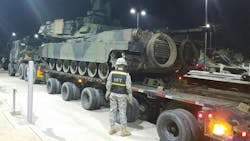
Before partnering with NextGen Growth Partners and founding NextGen Fleet Solutions, I served in the U.S. Army as a tank officer. In our motor pools, we managed fleets of Abrams tanks and the fuel trucks that kept the vehicles alive. These were massive 2,500-gallon tankers and fuel trailers, pumping JP-8 through complex hose systems to keep our vehicles in the fight. If our fuelers failed, so did the mission. The lesson stayed with me: Take care of your fuelers or your operations grind to a halt.
After speaking with countless fleet owners, I have learned it is not so different in the private sector. A bulk transporter’s business is more than the value of its equipment. It’s the systems, safety culture, leadership, and people that make the operation run smoothly. That’s why so many owners nearing retirement ask this critical question: “How do I sell my business without losing what made it special?”
If the Army taught me anything, it’s the value of planning. Start early. Take the time to honestly reflect so you can protect your people, customers, and business legacy while also attracting the right buyer at the right price.
This article covers both sides of the equation. First, the leadership and legacy perspective. Second, a practical checklist that prepares your company for a smooth and successful transaction.
Tank truck businesses are different—and that matters in a sale
Buyers quickly discover that tank truck fleets are not like general freight carriers. The operational complexity alone sets them apart. Hazmat-handling requirements; spill prevention, control, and countermeasure (SPCC) regulations; tank integrity inspections; vapor recovery systems; and tank wash protocols all introduce additional demands. And specialized equipment such as pumps, meters, hoses, valves, and power take-off (PTO) systems further raise the sophistication level.
These realities influence what buyers value most, and safety and compliance typically top the list. Buyers study compliance, safety, accountability (CSA) scores; audits; training records; drug testing history; and incident logs. Driver quality and retention are important because experienced tank truck drivers are a scarce and valuable asset. Customer relationships also matter. Fuel and chemical shippers expect reliability and consistency, and long-standing customer stability increases valuation. Finally, disciplined maintenance signals long-term health. Pressure tests, lining and coating documentation, pump and meter performance, preventive maintenance schedules, and uptime metrics all help buyers gauge operational readiness.

Motor pool lessons: Why legacy matters more than price
During my time as a tank company commander, there were many long nights in the motor pool. We changed filters, replaced road wheels and track pads, troubleshot hydraulic leaks, and made sure our fuelers stayed ready. What made those nights meaningful was not the equipment itself. It was the people who cared enough to do things the right way every single time. When I passed command to my replacement, choosing the right leader mattered as much as any operational detail.
When I speak with fleet owners considering retirement, I see the same sense of pride. They built a culture of safety, a team that knows how to handle volatile product, a shop that takes maintenance seriously, and customer relationships strengthened over decades. Owners are not simply stepping away from a business. They are handing over something they poured themselves into.
These owners are not simply stepping away from a business. They’re handing over something they spent their life building. Too often, they underestimate the emotional complexity of surrendering control.
The real question is not: “Will I be able to sell my business?” It’s: “Will they take care of my people and do as good a job as I did?”
That is why choosing the right buyer is a leadership decision as much as a financial one. The goal is not to chase the biggest check. The goal is to ensure the business continues with the same pride, discipline, and values that made it a success.
The three buyers—and what owners should know about each
When you begin to explore a sale, you will generally encounter three categories of buyers. Each come with strengths and tradeoffs to consider.
- Financial buyers: Examples include private-equity firms, family offices, and investment groups. They bring capital for growth, new tank trailers, telematics upgrades, and acquisitions. They are skilled with deal structures. The tradeoff is greater pressure for margin expansion and the possibility of cultural disruption. They often lack hazmat experience, which makes diligence more intensive.
- Strategic buyers: Examples include large carriers, energy companies, and chemical distributors. They understand the regulatory environment and can integrate your fleet into existing terminals. Drivers often benefit from expanded support and stability. The tradeoff is that your brand may disappear into a larger organization, and administrative or shop teams could face consolidation.
- Entrepreneurial buyers: Examples include owner operators and search-fund managers. These buyers typically offer continuity and a long-term leadership presence. They prioritize preserving what works. Although smaller in scale, they excel when an owner values protecting drivers’ jobs, maintaining a strong safety culture, and preserving customer relationships.
Choosing among these buyer types is not only about structure. It’s about alignment with the legacy you prefer.
A practical pre-sale checklist for tank truck businesses
A well-prepared business closes faster, commands a higher price, and attracts a capable buyer who inspires confidence. The following steps help owners prepare.
- Clean up your financials: Buyers want clarity. Prepare accurate financial statements, clean EBITDA adjustments, clear distinctions between maintenance and capital expenditures, and transparent allocations of insurance, payroll, and fuel costs. Summaries of customer contracts, seasonality patterns, load counts, and route profitability help buyers understand stability and concentration risks.
- Bolster safety and compliance: A strong safety record is essential in tank trucking. Buyers will ask for driver qualification files, hazmat endorsements, drug and alcohol testing records, FMCSA audits, CSA score history, incident logs, and training documentation. A consistent safety program builds trust quickly.
- Tighten maintenance and fleet documentation: Maintenance discipline reflects the true condition of a fleet. Prepare preventive maintenance logs, DOT tank inspections, pressure test histories, lining and coating documentation, pump and meter overhaul records, uptime metrics, and replacement schedules for tractors and tank trailers.
- Build your leadership bench: Cross training protects the business from disruptions and increases buyer confidence. Buyers value a strong shop foreman, a dependable dispatcher, a proactive safety manager, and a second in command who understands customer relationships and routes. This leadership depth reduces risk during the transition.
- Capture tribal knowledge: Create a transition binder that outlines standard operating procedures (SOPs), loading and unloading procedures, emergency response guidance, customer preferences, vendor contacts, insurance details, and shop processes. Reducing dependency on one person increases the value of the business.
- Define your preferred post-sale role: Some owners want to remain involved. Others prefer a short transition or an immediate exit. What matters is clarity. Being upfront about expectations sets the tone for a smoother negotiation and closing.
A typical sale timeline
While every deal is unique, most follow a similar four-phase structure.
- Phase 1. Initial conversations (1-3 months): Both sides evaluate cultural alignment, high-level goals, and initial financials. Buyers may tour facilities and meet key staff.
- Phase 2. Letter of intent (30-45 days): The LOI outlines price, structure, working capital needs, seller rollover, exclusivity, and a target closing timeline. It is nonbinding but sets expectations for the remainder of the process.
- Phase 3. Due diligence (30-90 days): This is the deep review of the business. Buyers examine fleet inspections, maintenance records, CSA and DOT files, driver credentials, customer concentration, shop processes, spill and incident history, insurance claims, and any pending or historical legal matters. Preparation reduces stress during this phase.
- Phase 4. Final agreement and closing (~30 days): This phase includes legal documentation, financing arrangements, insurance transitions, HR onboarding, and operational handoffs. Seller involvement after closing depends on the agreement negotiated earlier.
Passing the torch: How to choose an honorable buyer
You built something worth protecting. When evaluating buyers, ask questions that go deeper than valuation. How will you treat my drivers? What happens to my shop and dispatch team? How will you protect our culture? What investments will you make in the first year? Can you walk me through a transition you have led before?
A good buyer does not shy away from these questions. They welcome them. The right buyer preserves your culture, your customers, your safety reputation, and the livelihoods of your people. That is the legacy that matters most.

Conclusion: Securing your legacy is a worthwhile objective
Bulk transportation operations are built on discipline, reliability, and pride. You have maintained equipment others would not want to touch, served customers who expect precision, and built a team capable of handling one of the most demanding segments in transportation. Selling your business does not mean letting go of what makes it special. With preparation, transparency, and the right partner, you can ensure your people are protected, your customers remain in good hands, and your legacy continues long after you climb out of the driver’s seat.
A successful sale isn’t measured by the check in the mail. It’s determined by the health of the business after your exit. When the operation keeps running safely, reliably, and respectfully, you’ve accomplished the mission.
About the Author
 Nick Lee
Nick Lee
Nick Lee is a former U.S. Army tank officer who spent eight years leading soldiers, managing operational logistics, and maintaining complex heavy-vehicle fleets before transitioning into the business world. He is the founder and managing partner of NextGen Fleet Solutions and is backed by NextGen Growth Partners through their CEO-in-Residence program. Nick is focused on acquiring and operating a fleet services business, with a long-term commitment to preserving an owner’s legacy and investing in the people who make the business run. He graduated from the United States Military Academy at West Point with a bachelor’s degree in information technology, earned a master’s in data science from Eastern University, and completed his MBA at Northwestern University’s Kellogg School of Management. Nick lives in Chicago.