Smart technology prevents dumb mistakes during fuel discharge
Key Highlights
- MIDAS combines advanced sensing, RFID verification, and energy harvesting to prevent cross-fueling errors in real-time.
- The system features a self-charging battery pack powered by fuel flow, ensuring long-term, maintenance-free operation in harsh conditions.
- Installation of MIDAS elbows has led to significant safety improvements, operational efficiencies, and reduced insurance costs for fuel transport companies.
- Designed to withstand extreme temperatures, the system's industrial-grade batteries ensure reliable performance in cold and hot environments.
- Real-time alerts and comprehensive data logging facilitate compliance, driver training, and incident management in fuel delivery operations.
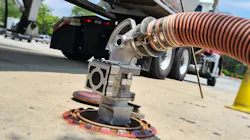
What can possibly go wrong when unloading a tanker filled with petroleum-based fuels? Too much.
If a cross-fueling incident occurs and a tank truck driver intentionally or unintentionally discharges water diluted or the incorrect fuel into a storage tank, it gets expensive, costing up to $100,000 or more in damages, insurance claims, uplifts, operational downtime, and loss of business reputation.
The potential for human error is rising due to a growing shortage of experienced CDL drivers, so fleet managers must become increasingly vigilant in monitoring every fuel delivery to improve safety, reduce risks, and support compliance. This task has been simplified by the development of a mis-fuel identification and avoidance system (MIDAS) that seamlessly integrates advanced wireless technology with emergency shut-off valve actuation to identify and prevent a potential cross-contamination incident. The MIDAS system immediately stops the fuel discharge process, generates real-time alerts, produces a time-stamped data trail to increase management oversight and control, and provides other useful information.
Precision sensing and electro-mechanical actuation
Available in five different configurations, MIDAS cross-drop prevention elbows are available either as a portable hose accessory or permanently attached at the tank’s filling point. When fuel flows through the device the energy generated is stored in an ultra-long-life rechargeable Li-ion battery pack that energizes the low-power electronics and RFID wireless communications as well as the emergency shut-off valve.
Texas-based bulk carrier installs MIDAS anti-contimination elbow
Searching for an affordable technology specific to the fuel freight businesses, Fronk Oil, a major fuel carrier serving throughout Texas, installed MIDAS cross-drop prevention elbows across its fleet to reduce the risk of fuel type mis-matches during deliveries. This solution alerts drivers and fleet managers in real-time if there is a cross-drop attempt.
By installing these anti-contamination elbows, Fronk Oil was able to achieve a “healthy reduction” in its insurance premiums after presenting the technology to its insurer.
Initially, some drivers complained about having to double-check drops. However, they quickly adapted to the new routine and the benefits that ensued, with fuel deliveries proceeding smoothly with no lost time. Use of a custom Li-ion battery pack ensures that MIDAS cross-drop prevention elbows can operate maintenance-free for decades, able to reliably charge and discharge in swelter-ing Texas heat.
A multi-layer verification process analyzes the fuel being discharged, communicating via RFID to an adjacent tank tag installed at each fill point. Onboard optical sensors analyze the fuel’s density and refractive characteristics to verify that the type of fuel matches the programmable specifications of the tank tag. Data generated during each delivery is transmitted via Bluetooth to the MIDAS Link, a communications modem installed on the delivery truck that is linked to a central computer, providing 24/7 monitoring protection with instantaneous alerts if an incident is detected. Time-stamped data facilitates comprehensive reporting for compliance, remedial driver training, and disciplinary action, if required.
MIDAS cross-drop prevention elbows contain various low-power subsystems, including an optical fuel identification sensor, internal thermistor, RFID electronics, onboard data logging system, and wireless communications modem. In addition to powering these various subsystems, the battery pack also delivers short bursts of high pulse energy to power the stepper motor that actuates a butterfly shut-off valve that permits ‘good fuel’ flow while preventing costly cross-drops.
An innovative approach to energy harvesting
Unlike conventional battery-powered fuel monitoring equipment, the MIDAS is self-charging. As fuel gets discharged it moves through an internal axial impeller turbine that is connected to a miniature electrical generator. Fuel flows at a rate of 200 to 400 gallons per minute, enabling up to 11% of the battery pack’s storage capacity to be replenished during the 8 minutes it takes for an average delivery. Tank trucks make up to 30 stops per day, enabling sufficient amounts of renewable energy to be generated each workday to keep the battery pack well charged.
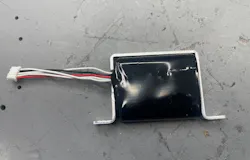
Seeking to reduce the long-term cost of ownership, Berrys Technologies collaborated with application engineers at Tadiran to develop a custom battery pack consisting of three industrial grade TLI-1550 rechargeable Li-ion batteries. The TLI-1550 batteries were chosen for their compact size, exceptional long-life characteristics (25-plus years and 5,000 full discharge cycles), their ability to be recharged and discharged at extreme temperatures ranging from minus-40 degrees Celsius to 85 C, and their high tolerance to variable charging conditions. TLI-1550 batteries also feature an annual self-discharge rate of approximately 1% per year, allowing the power management system to remain sufficiently charged even during long periods of inactivity when the onboard clock is turned off.
This custom battery pack is particularly well suited to the variable power demands of this type of energy harvesting application, where the available charging energy is intermittent and depends on actual fuel delivery activity. In addition to supporting low-power requirements for sensing, data logging, and wireless communication, the custom battery pack draws 1.7 A pulses to power the stepper motor that switches the shut-off valve between four different states of operation: shut-off, ‘crack’ open, ‘drain’ open, and ‘fully’ open. Industrial-grade TLI-1550 rechargeable Li-ion cells have been proven ideal for these demanding requirements by combining long service life, an extremely wide temperature range, instantaneous activation, and stable voltage across a wide temperature range.
Matching the power supply to the conditions
Since the amount of electrical energy generated during each discharge cycle fluctuates depending upon the fuel flow rate and delivery conditions, the battery pack needed to be adaptable to variable charging voltages while maintaining stable performance. Tadiran TLI-1550 Li-ion cells proved particularly well suited to this demanding operating environment, performing reliably in intermittent and dynamically changing charge conditions ranging from minus-40 C to 85 C.
For example, a fuel tanker parked overnight in winter may begin the day at very low ambient temperatures, yet the system must be ready to instantaneously power the device’s sensing electronics, wireless communications functionality, and shut-off valve during the day’s first delivery stop. In these challenging environmental conditions, use of an industrial grade Li-ion battery is essential to ensure that the system can be reliably discharged and recharged at extremely cold temperatures that far exceed the limits of consumer grade Li-ion batteries.
For added protection, the battery pack is encased within an ATEX-approved explosion-proof compartment that is connected by a wiring harness to reduce the risk of electrical spark when transferring hazardous fuels. A sealed compartment also helps prevent moisture infiltration and exposure to corrosive chemicals.
By combining precision low-power sensing electronics, high-pulse valve actuation, self-contained energy harvesting and an industrial grade Li-ion battery pack, MIDAS cross-drop prevention elbows provide an all-in-one, cross-drop protection and fleet monitoring solution. Deployment of this advanced technology serves to improve operational efficiencies, mitigate risks, protect brand reputation, and reduce insurance rates for one of the fuel distribution industry’s most demanding applications.
About the Author
Sean Berry
Sean Berry is the technical sales director at Berrys Technologies. He plays a key role in the sales and distribution of MIDAS cross-drop prevention elbows throughout the United States, where a rapidly evolving technology landscape and the significant market opportunity exist within one of the world’s largest fuel distribution sectors. He is working to further establish MIDAS as the industry standard for safeguarding fuel supply chains nationwide. Sean holds a Bachelor of Science degree in product design from Nottingham Trent University.